


Internal News, Market News
Frozen Durian Suppliers: How To Choose The Right Partner Based On Total Cost, Not Just Price Per Kilogram
Choosing a reliable frozen durian supplier is important for businesses to maintain a stable supply of raw materials and control production costs. However, unstable supply, inconsistent quality between batches, and product loss after thawing mean that suppliers should not be evaluated based only on price per kilogram. This article explains the benefits and characteristics of frozen durian, how to check product quality, and five key criteria for evaluating suppliers. These criteria help businesses choose the right partner based on raw material origin, supply capacity, product specifications, cooperation policies, and actual costs.
Why Are Businesses Switching To Frozen Durian?
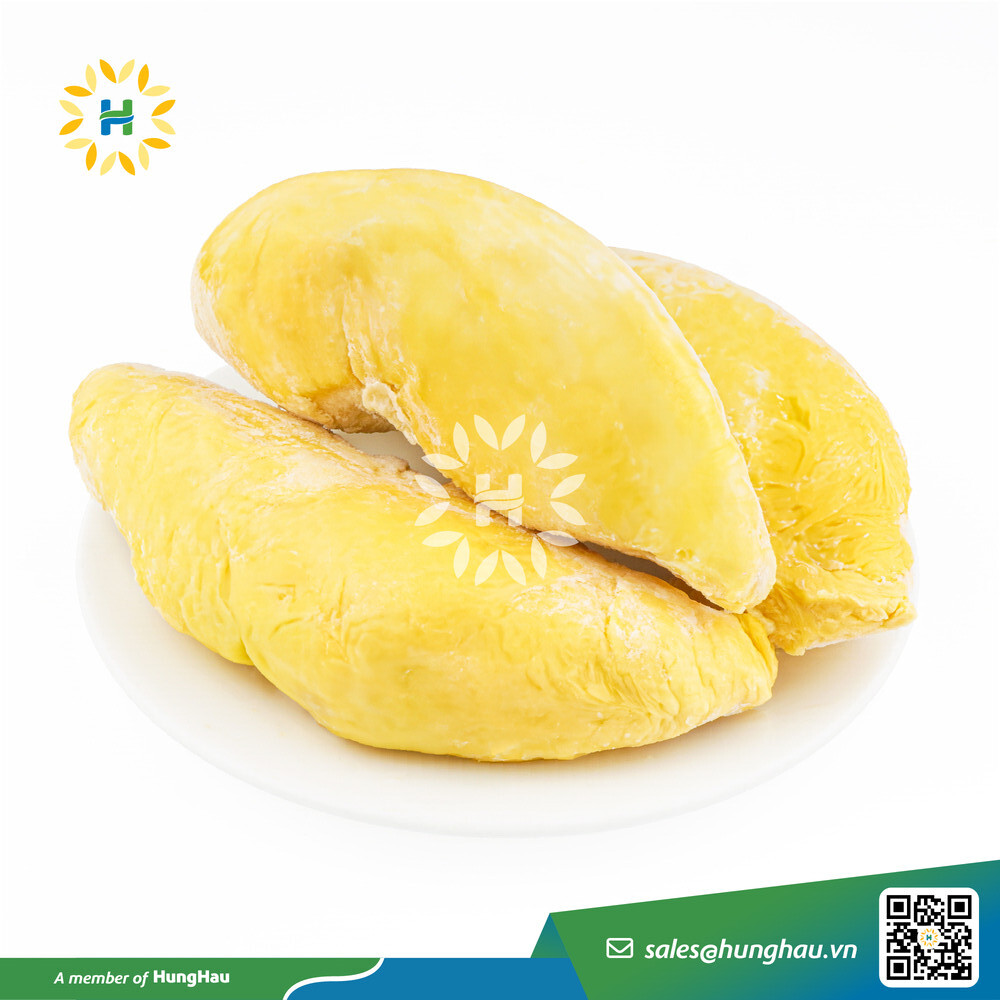
For food manufacturing and processing businesses, maintaining a stable supply of raw materials is important to ensure production schedules and control costs. However, fresh durian supply depends on the harvest season, purchasing prices can change, and its shelf life is short. These factors make it difficult for businesses to purchase large quantities of raw materials regularly.
To address these challenges, frozen durian offers a practical solution that helps businesses store raw materials and reduce their dependence on the harvest season. When properly processed, frozen, and stored, the product can maintain its quality for a longer period while reducing product loss and preparation steps. As a result, food manufacturers, F&B businesses, importers, and distributors can plan their purchasing, production, and supply activities more effectively.
Challenges Of Using Fresh Durian
One of the biggest challenges of using fresh durian in food production is its seasonal supply. During the main harvest season, durian is usually available in large quantities. However, during the off-season, supply may decrease while purchasing prices increase. These changes make it difficult for businesses to maintain stable raw material costs, especially those that need large quantities of durian for year-round production.
In addition to supply issues, the quality of fresh durian can vary between harvests due to differences in variety, ripeness, and storage conditions. This can lead to differences in the color, flavor, and texture of durian flesh, making it harder to maintain consistent quality in finished products. Furthermore, its short shelf life and preparation steps, such as removing the shell, seeds, and unsuitable parts, can increase labor costs, product loss, and production expenses.
Benefits Of Frozen Durian
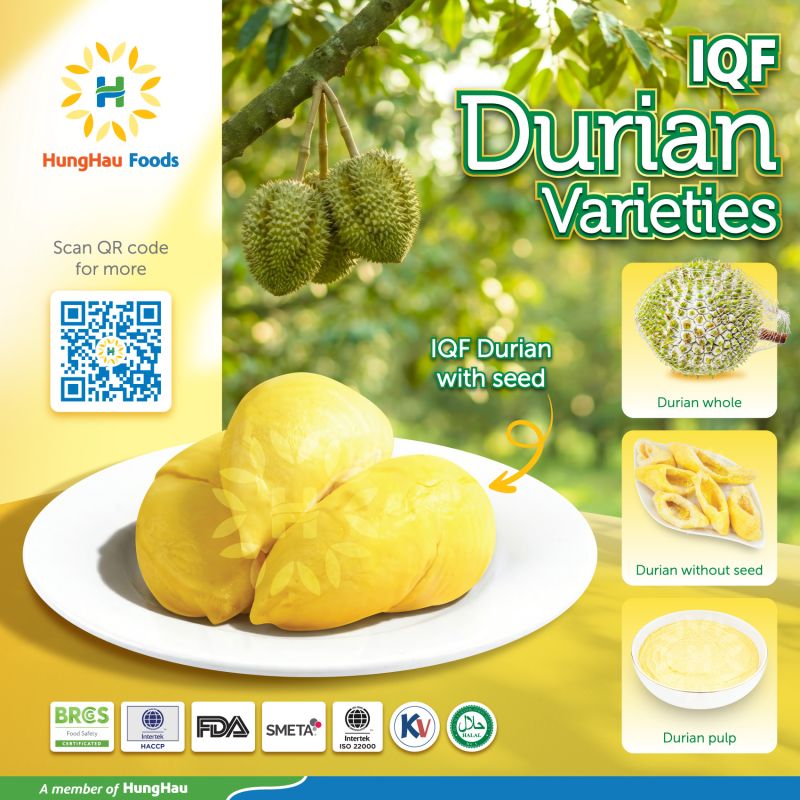
Frozen durian helps businesses maintain a stable supply of raw materials throughout the year thanks to its longer storage life. It reduces dependence on the harvest season and lowers the risk of supply shortages when production demand increases. When properly frozen and stored, the product can maintain relatively consistent color, flavor, and flesh texture, helping businesses control raw material quality across production batches.
In addition to its storage benefits, frozen durian products that have been peeled, deseeded, or processed into puree can reduce preparation time, labor costs, and raw material waste. As a result, businesses can plan their purchases more effectively, optimize actual production costs, and maintain continuous operations.
Who Uses Frozen Durian?
Frozen durian is widely used as an ingredient in different areas of food processing. Manufacturers of confectionery, ice cream, pia cakes, mooncakes, and desserts often choose frozen durian to maintain a stable supply of raw materials. It also makes ingredient measurement easier and helps ensure consistent quality in finished products.
In the F&B industry, beverage chains, bakeries, and dessert businesses use frozen durian to prepare smoothies, sweet soups, ice cream, and other durian-flavored products. In addition, frozen food importers and distributors purchase frozen durian in large quantities to supply domestic and international markets.
Understanding Frozen Durian Products
Many people believe that frozen durian loses its natural flavor, becomes less rich, or does not taste as good as fresh durian. However, this is not always true. When durian is selected at the right ripeness, quickly frozen, and stored under proper conditions, it can retain much of its natural flavor, color, and creamy taste. However, the texture of durian flesh may change after thawing, especially if the product is not kept at the correct temperature during storage or transportation.
Therefore, frozen durian quality should not be evaluated based only on taste. It also depends on the quality of the raw materials and the processing methods used. Understanding these factors helps businesses identify differences between products on the market and choose suppliers that meet their processing requirements.
Common Types Of Frozen Durian
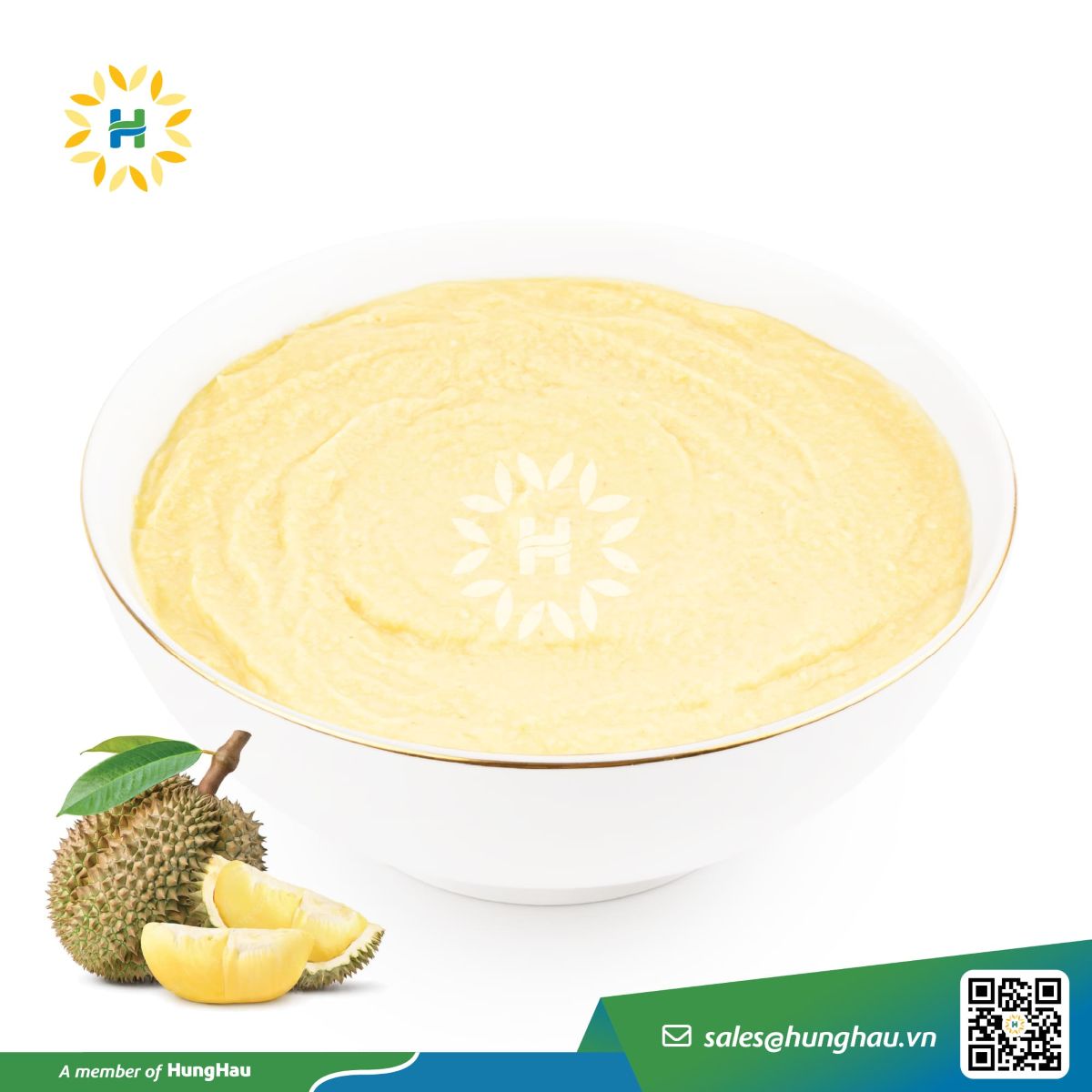
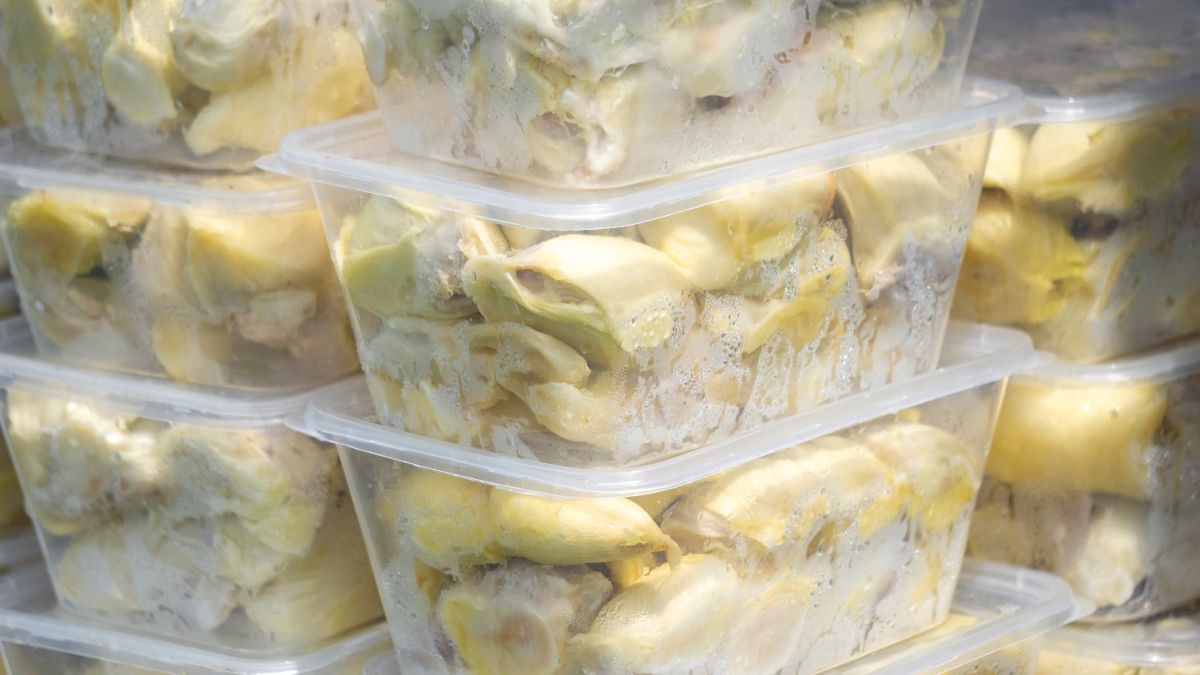
Frozen durian is available in different product forms, mainly depending on the level of preparation and processing. The table below compares their key characteristics and common uses.
| Product Type | Key Characteristics | Common Uses |
|---|---|---|
| Whole Frozen Durian | The shell, seeds, and original fruit shape remain intact. Buyers need to remove the shell and separate the flesh before use. | Suitable for businesses that distribute or sell whole durian fruits. |
| Frozen Durian Flesh | The shell has been removed, leaving individual durian flesh segments. Products are available with or without seeds. | Suitable for businesses that use durian flesh to produce cakes, ice cream, and desserts. |
| Frozen Durian Puree | The seeds are removed, and the durian flesh is blended into a smooth puree. | Used as an ingredient in ice cream, smoothies, sauces, and cake fillings. |
Durian Varieties, Harvest Ripeness, And Freezing Technology
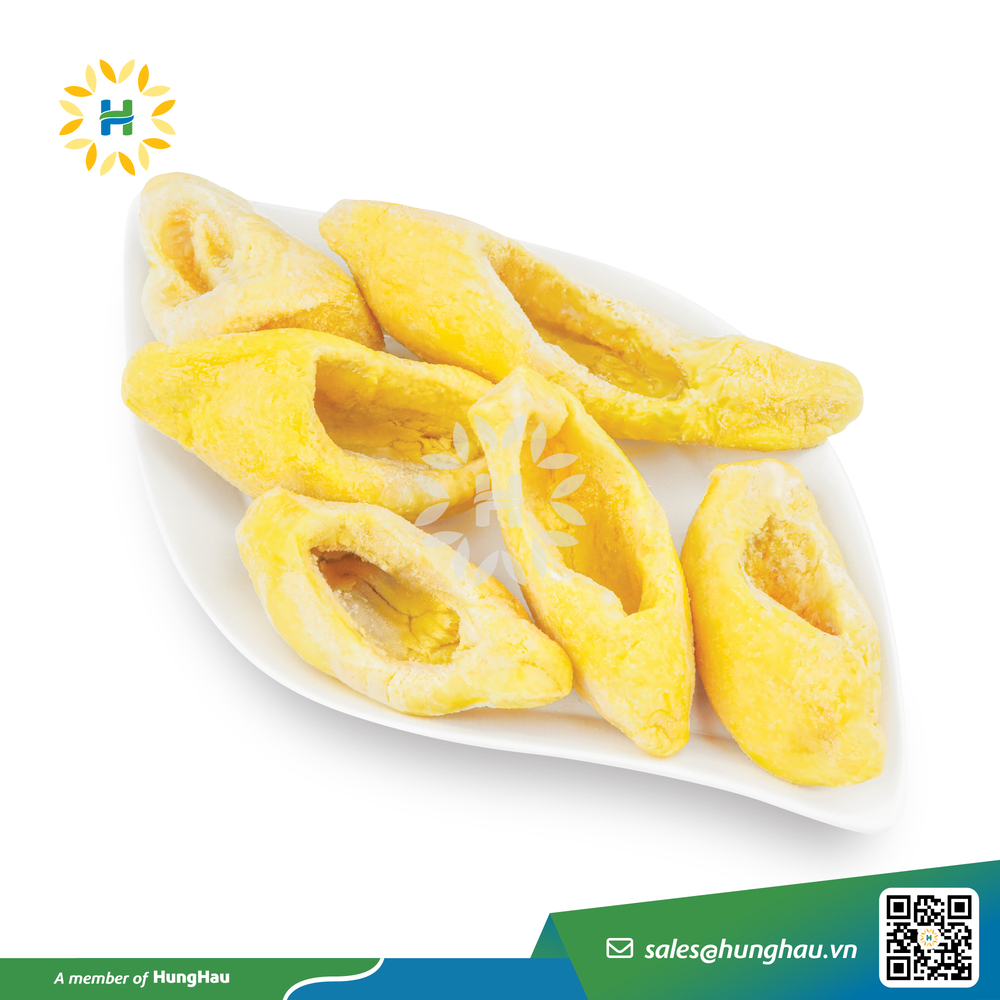
The quality of frozen durian depends on both the original raw materials and the freezing process. Durian varieties determine the fruit’s natural flavor, while ripeness at harvest affects its sweetness and flesh texture. Freezing technology also plays an important role in maintaining product quality during storage.
| Factor | Key Characteristics |
|---|---|
| Durian Varieties | Ri6: Deep yellow flesh with a rich, sweet taste, strong aroma, and smooth, soft texture when ripe.
Monthong: Thick, light yellow flesh with a relatively firm texture and a milder aroma compared to Ri6. |
| Ripeness At Harvest | Underripe: The flesh is still firm, less sweet, and has a weak aroma.
Properly Ripe: The flesh has the right softness, sweetness, and natural aroma of the variety, making it suitable for processing and freezing. Overripe: The flesh becomes too soft, loses its shape easily, and may release more water after thawing. |
| Freezing Technology | Slow Freezing: Water inside the durian flesh may form large ice crystals, which can damage its texture and cause the flesh to become soft and watery after thawing.
Individual Quick Freezing (IQF): Quickly freezes individual durian segments, helping reduce the formation of large ice crystals. This helps maintain the shape and texture of the durian flesh while reducing softness after thawing. |
Major Durian Exporting Countries
Southeast Asia is an important durian-producing region for the international market due to its favorable climate and large growing areas. Thailand, Vietnam, and Malaysia are three major durian-exporting countries in the region. Each country has its own strengths in durian varieties and product offerings.
-
- Thailand: Thailand has a well-established durian export industry and is known for its Monthong variety, which has thick flesh, a sweet taste, and a relatively mild aroma. In addition to fresh durian, Thailand exports frozen durian products, including whole frozen durian and frozen durian flesh, to meet consumption and processing needs in various markets.
- Vietnam: Vietnam has major durian-growing areas in the Central Highlands and the Mekong Delta, with Ri6 and Monthong being two popular varieties. Besides exporting fresh durian, Vietnam is also developing processed durian products, especially frozen durian flesh, to meet the raw material needs of food manufacturers.
- Malaysia: Malaysia is known for its Musang King durian, which has a rich, creamy taste and a slightly bitter aftertaste. Along with fresh durian, Malaysia supplies whole frozen durian and frozen durian flesh to international markets.
How To Check A Frozen Durian Batch: Flesh Color, Aroma, Ice Crystals, And Intact Segments
Before purchasing frozen durian in large quantities, businesses should inspect product samples to evaluate their actual quality. The inspection should be carried out while the product is still frozen and after proper thawing. Businesses should focus on four key criteria: flesh color, aroma, ice crystal formation, and the percentage of intact segments.
Criteria How To Check Warning Signs Flesh Color Check the flesh color and compare it with the characteristics of each durian variety. Ri6 usually has deep yellow flesh, while Monthong has a lighter yellow color. Dark spots, unusual discoloration, or clear color differences between segments of the same variety. Aroma Check the aroma after thawing. Good-quality durian should maintain the natural aroma of its variety. A sour or unusual smell that is different from the natural aroma of durian. Ice Crystal Formation Check for ice or frost on the product surface while it is still frozen. Large ice formations or segments that stick together unusually may indicate temperature changes during storage. Percentage Of Intact Segments Check the number or weight of segments that maintain their original shape compared to the total sample. A high number of broken, damaged, or deformed segments, especially when businesses need whole durian segments for food processing. In addition to visual inspection, businesses should check the usable weight of durian flesh after thawing to determine the actual product loss. A batch with excessive water loss or a high percentage of damaged segments may increase raw material costs, even if the initial purchase price is low.
Five Key Questions To Evaluate Frozen Durian Suppliers
Traceability And Certifications: Growing Area Codes, Packing Facilities, And Food Safety Standards (HACCP, ISO 22000, etc.)
HungHau Foods supplies frozen Ri6 and Monthong durian selected from growing areas in the Mekong Delta and Central Highlands of Vietnam. After harvesting, the raw materials are transported to Hung Hau Fruit and Vegetable Factory (HFV) in Dong Thap Province for inspection, preparation, and processing.
For Monthong durian, the company carries out manual sorting and checks ripeness and weight to remove fruits that do not meet quality requirements before freezing. This process helps control raw material quality from the beginning and reduces quality differences between finished product batches.
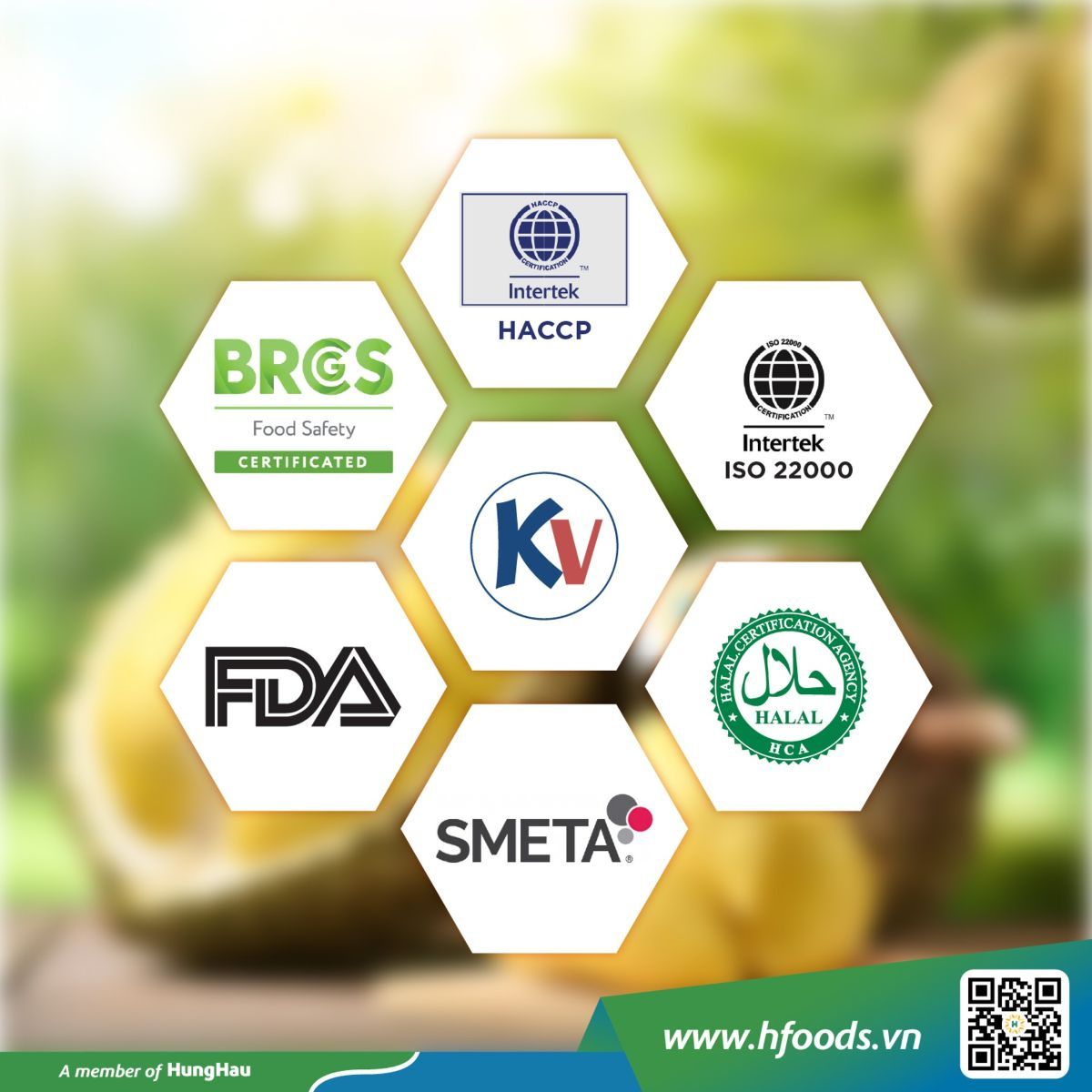
Regarding quality standards, HungHau Foods states that it has obtained a GACC registration number for frozen durian products, supporting exports to China. In addition, the company reports that its Hung Hau Fruit and Vegetable Factory (HFV) follows food safety management systems and standards such as HACCP, ISO 22000, and BRCGS. These standards help business partners evaluate production conditions, quality control processes, and the company’s ability to meet the requirements of importing markets.
Supply Capacity And Cold Chain Management: Production Volume, Cold Storage, Transportation, And Monthly Delivery
HungHau Foods reports a frozen durian supply capacity of up to 4,000 tons of finished products per year, with products available throughout the year. To maintain product quality, the company uses Individual Quick Freezing (IQF) technology and stores finished products in cold storage at -18°C, with a shelf life of 24 months from the production date.
By combining production capacity with cold storage facilities, HungHau Foods can store frozen durian products for longer periods. This helps the company manage its inventory and better meet customer demand outside the harvest season.
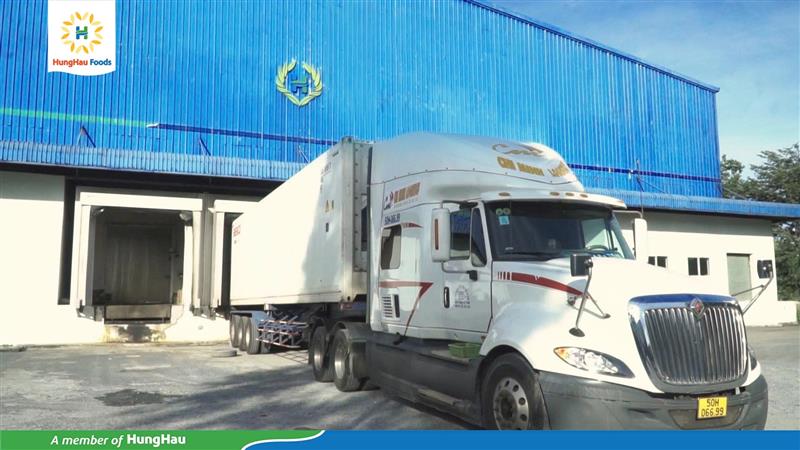
For export activities, HungHau Foods uses refrigerated containers to maintain product temperature during transportation and reduce the risk of thawing, which may affect the quality of durian flesh.
Total Cost Instead Of Price Per Kilogram: Product Loss, Usable Yield After Thawing, Packaging, And Return Policies
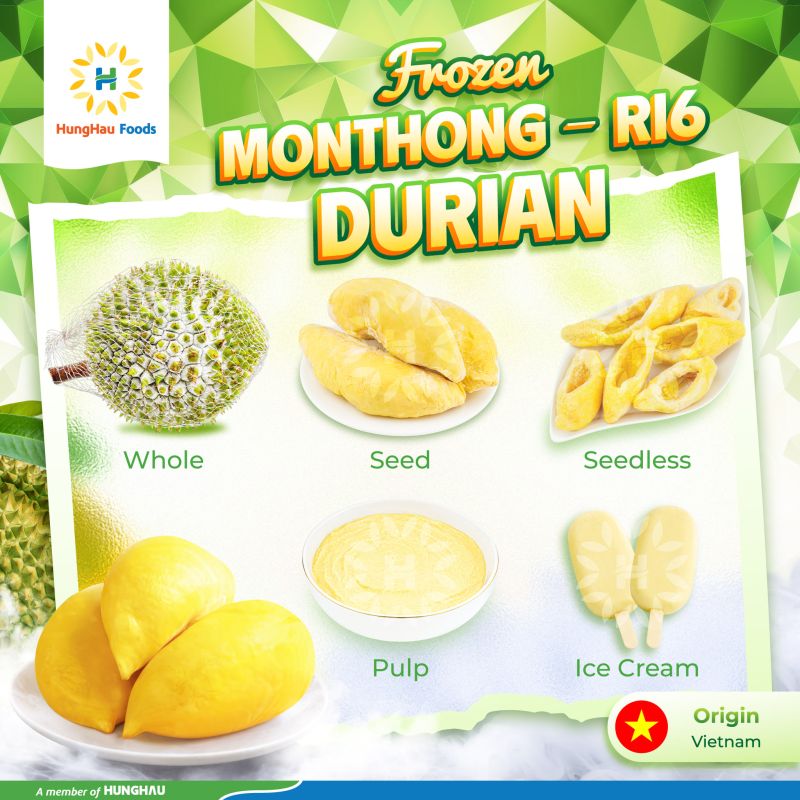
When purchasing frozen durian from HungHau Foods, businesses should evaluate costs based on the actual amount of usable raw materials rather than comparing prices per kilogram alone. HungHau Foods offers different product forms, including whole frozen durian, frozen durian segments with seeds, seedless segments, and durian puree.
Whole frozen durian results in product loss from shells and seeds, while seedless segments and puree help reduce preparation steps. Businesses should also check product quality after thawing, especially water loss and the percentage of raw materials suitable for processing. This helps determine the actual cost per kilogram of usable ingredients.
For packaging, HungHau Foods offers frozen durian puree in PE/PA bags, with standard packaging sizes of 1 kg, 5 kg, and 10 kg, or customized options based on customer requirements. Choosing the right packaging size helps businesses avoid thawing more raw materials than needed.
HungHau Foods: Frozen Durian Supplier And Cooperation Process
HungHau Foods’ Supply Capacity And Frozen Durian Products
HungHau Foods is a company specializing in agricultural processing and exports. It supplies frozen Ri6 and Monthong durian in different forms, including whole frozen durian, frozen segments with seeds, seedless segments, and durian puree.
The company has a frozen Ri6 durian supply capacity of up to 4,000 tons of finished products per year, meeting the large-volume purchasing needs of food manufacturers and distributors.

For IQF Monthong durian, the raw materials go through manual sorting, ripeness checks, and weight inspection. The fruits are then cleaned and pre-cooled before the flesh is separated. The durian flesh is quickly frozen using Individual Quick Freezing (IQF) technology at -40°C, helping reduce changes in texture, color, and flavor. The product is available in standard packaging of 10 kg per bag or customized packaging based on customer requirements. It is stored at -18°C or below.
Regarding quality standards, HungHau Foods has announced its GACC registration for frozen durian products, supporting export requirements for the Chinese market. In addition, the company reports that it follows food safety standards and certifications such as HACCP, ISO 22000, and BRCGS in its food processing operations to meet the requirements of domestic and international partners.
Cooperation Process
Businesses interested in importing or distributing frozen durian can contact HungHau Foods directly to discuss product types, packaging specifications, target markets, and estimated order quantities, with a minimum order of 3 containers. Based on this information, the sales team will provide advice on supply capacity, quotations, and suitable commercial terms.
After both parties agree on the cooperation terms, they will sign a contract and proceed with payment. The payment terms include a 30% deposit, with the remaining 70% paid against scanned shipping documents (Scan Doc).
HungHau Foods will then process the order according to the agreed plan, including raw material preparation, processing, freezing, packaging, and transportation. Delivery time will depend on the order quantity, production schedule, and delivery location.
Frequently Asked Questions About HungHau Foods Frozen Durian
What Is The Minimum Order Quantity At HungHau Foods?
Businesses can contact HungHau Foods directly to discuss their purchasing needs and receive suitable advice.
Email: sales@hunghau.vn | Hotline: (+84) 79 721 3333
How Long Can Frozen Durian Be Stored?
HungHau Foods frozen durian has a shelf life of up to 24 months when stored at -18°C. The product is frozen using Individual Quick Freezing (IQF) technology, which helps reduce the formation of large ice crystals and maintain product quality during storage.
HungHau Foods offers flexible payment options for its customers. Specific payment terms will be discussed and agreed upon during the contract signing process.
CONTACT INFORMATION
Hung Hau Foods Joint Stock Company (HungHau Foods)
Agricultural Products Exporter – Frozen Fruit & Vegetable Supplier In Vietnam
Address: 642 Au Co Street, Bay Hien Ward, Ho Chi Minh City, Vietnam.
Email: sales@hunghau.vn | Hotline: (+84) 79 721 3333
References
https://hfoods.vn/vi/san-pham/puree-sau-rieng-dong-lanh/