


Market News, News & Event
FROZEN PINEAPPLE SUPPLIER: 5 KEY FACTORS FOR QUALITY AND COST EFFECTIVE SOURCING
Frozen pineapple is widely used in the food and beverage industry due to its long shelf life and versatility in production. However, to ensure consistent product quality and a stable supply, businesses need to choose a reliable frozen pineapple supplier that meets requirements for raw material quality, processing technology, and food safety. What are the key factors to consider when evaluating a supplier? This article highlights five important factors to help businesses select the right partner and improve sourcing efficiency.
Frozen Pineapple In Vietnam: Raw Material Advantages And Supply Potential
Pineapple is a tropical fruit widely used in the food and beverage industry for its distinctive aroma and naturally sweet and sour flavor. It can be used to produce juices, smoothies, fruit teas, ice cream, yogurt, and various other processed food products.
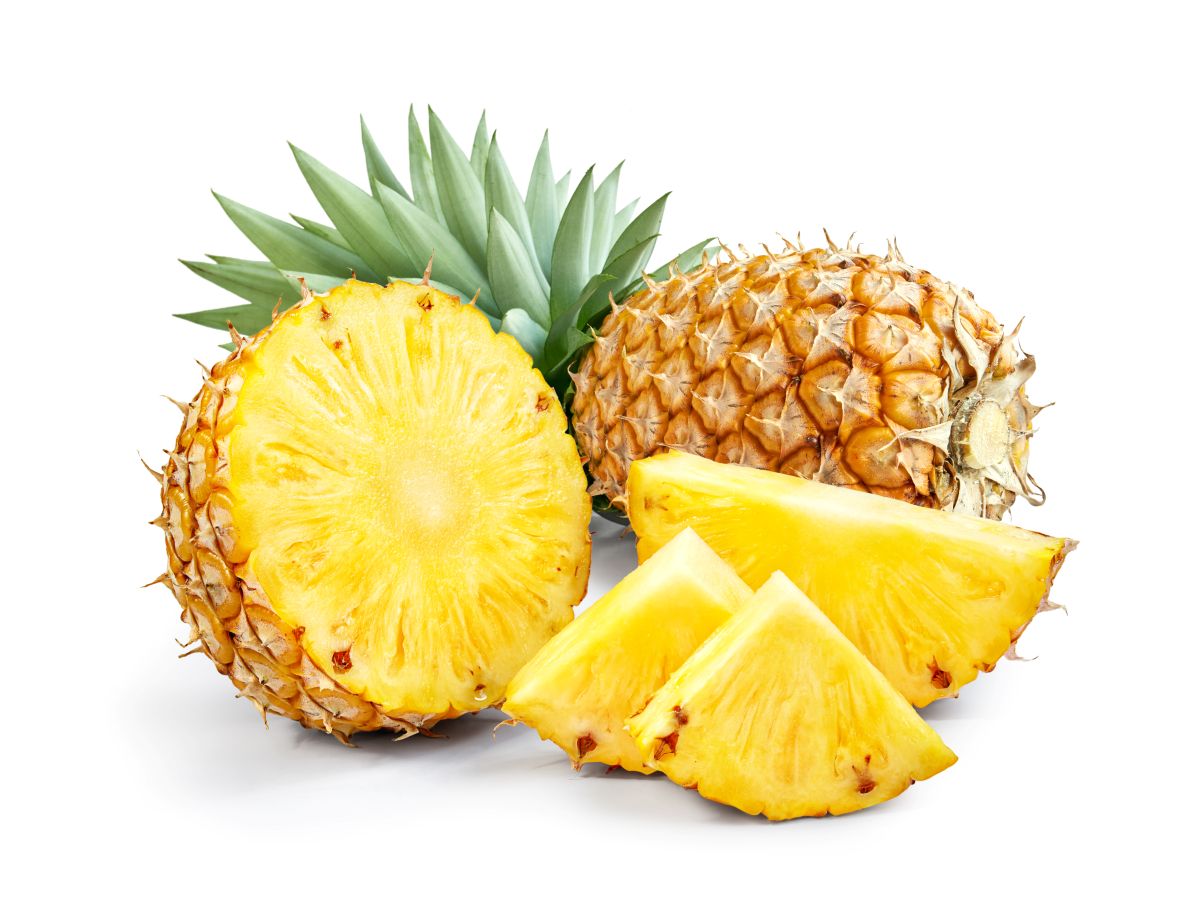
Vietnam has favorable climatic conditions for pineapple cultivation, providing raw materials for domestic consumption and export processing. However, for businesses importing large quantities, an abundant supply of raw materials alone is not enough to ensure production efficiency. Product quality consistency across batches, harvesting periods, and the ability to maintain a stable supply are also important factors to consider.
In this context, frozen pineapple offers a practical ingredient solution. Through processing and freezing, pineapple can be stored longer than fresh fruit, making inventory management, transportation, and industrial food production more convenient.
Seasonal Supply And Raw Material Storage Capacity
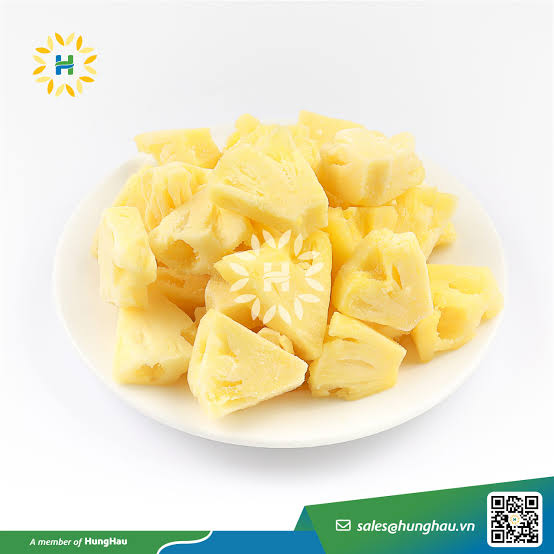
The quantity and quality of fresh pineapple can vary depending on the harvest season, weather conditions, and harvesting time. When supply decreases, food manufacturers may face difficulties maintaining sufficient raw materials, especially for production lines operating continuously.
Using frozen pineapple allows businesses to plan their sourcing activities more effectively. Raw materials are sourced, processed, and frozen during suitable periods, then stored at low temperatures to meet future production needs.
However, the ability to maintain a long term frozen pineapple supply depends on each supplier’s raw material sourcing capacity, processing capacity, and storage conditions. Therefore, businesses planning regular imports should evaluate the supplier’s storage capacity and ability to maintain a stable supply before establishing a partnership.
How Raw Pineapple Quality Affects Finished Products
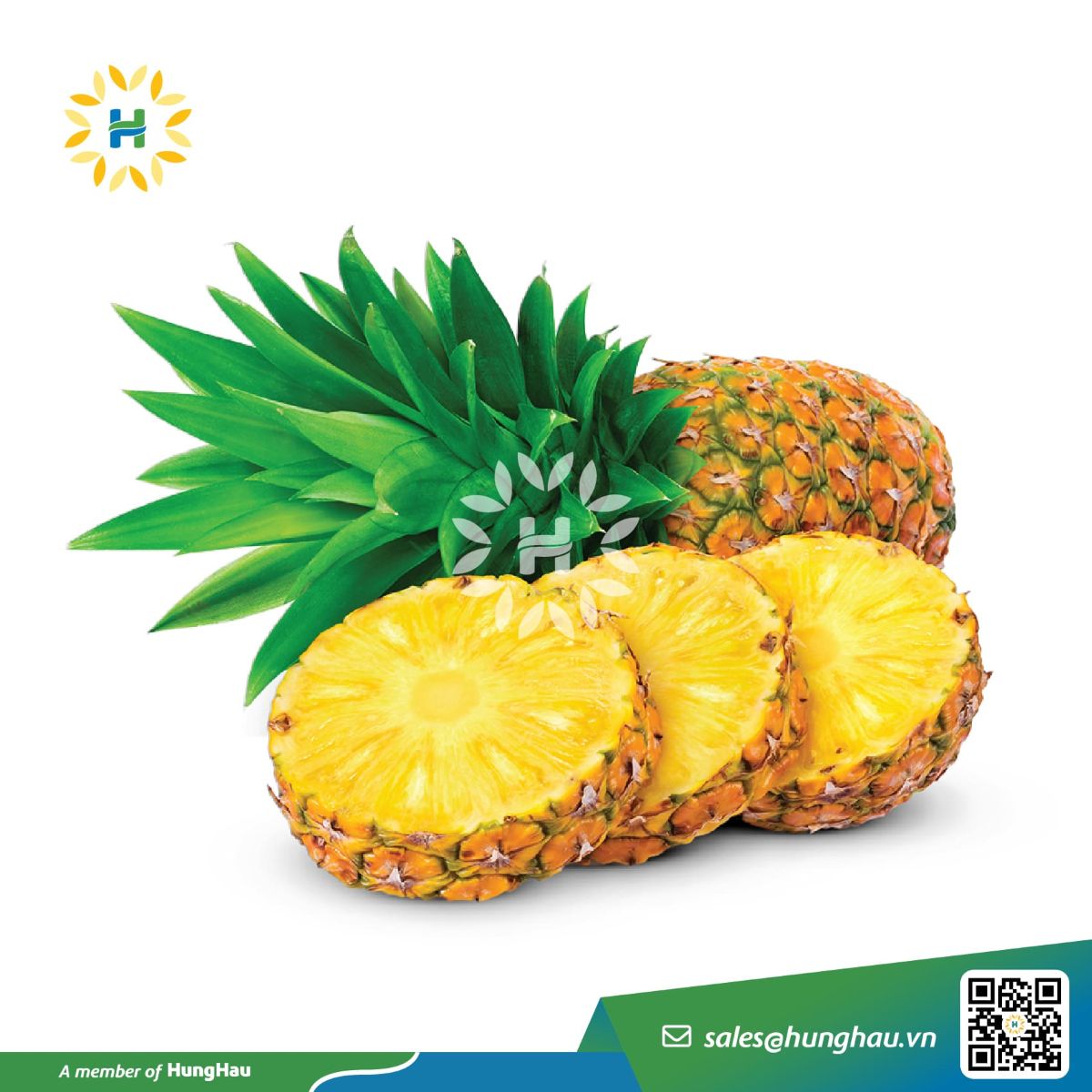
The quality of fresh pineapple directly affects the characteristics of processed and frozen products. Ripeness, color, sugar content, and acidity are among the main factors determining the flavor, appearance, and texture of the finished product. Underripe pineapple often has a stronger sour taste, while overripe pineapple may become too soft, making it unsuitable for products that need to retain their original fruit shape.
Depending on the intended application, businesses need to select raw materials that meet specific processing requirements. For beverage production, Brix level, acidity, and flavor are important indicators for maintaining consistent product quality. Meanwhile, manufacturers using pineapple chunks should consider fruit firmness, size, and the ability to retain texture after thawing.
| Pineapple Variety | Reference Brix Level (°Bx) | Raw Material Characteristics |
|---|---|---|
| Queen Pineapple | 14–18 | Rich sweetness, distinctive aroma, and relatively firm flesh. |
| Cayenne Pineapple | 12–16 | Mild sweetness, balanced acidity, high juice content, and suitability for industrial processing. |
| MD2 Pineapple | 14–17 | Relatively high sweetness, low acidity, attractive yellow color, and balanced flavor. |
| Spanish Pineapple | 12–15 | Sweet and sour taste with a more fibrous texture than some other varieties. |
Therefore, frozen pineapple suppliers should control raw material quality from the receiving stage and select suitable pineapples for each product type. This helps minimize quality differences between batches while supporting consistent finished product quality and stable production formulas.
How Does Freezing Technology Affect Pineapple Quality?
Freezing technology plays an important role in maintaining pineapple quality during storage and transportation. Freezing speed, ingredient size, and storage conditions can all affect the texture, color, and sensory characteristics of the product.
During slow freezing, ice crystals formed within the fruit tissue may grow larger and damage the cellular structure. This can cause pineapple to become softer or release more water after thawing.
In contrast, rapid freezing helps limit the formation of large ice crystals, reducing unwanted changes in the fruit’s structure. However, final product quality still depends on the initial raw material quality and maintaining appropriate temperatures throughout storage.
IQF Technology And Its Role In Maintaining Raw Material Quality
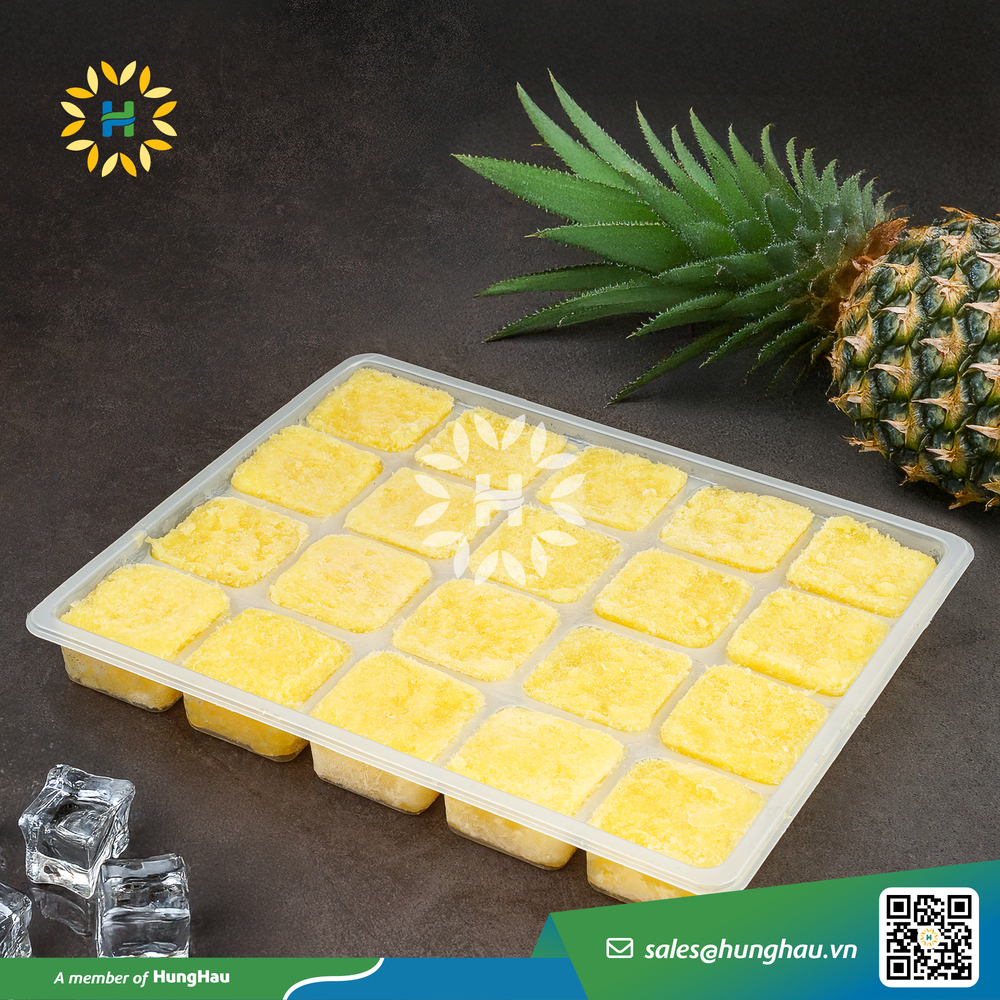
IQF (Individual Quick Freezing) is a rapid freezing technology that freezes individual pieces of raw materials. It is widely used in frozen fruit and vegetable processing.
For pineapple chunks, this method allows individual pieces to be frozen separately, preventing them from sticking together in large blocks. This makes portioning and handling ingredients more convenient for different production batches.
In addition, rapid freezing helps reduce the impact of ice crystals on the fruit’s cellular structure, supporting better texture retention after thawing.
However, freezing efficiency does not depend solely on the technology used. Raw material quality, processing time, hygiene conditions, and storage temperature must also be controlled. For frozen pineapple juice in cube or block form, businesses should also evaluate sensory characteristics and compatibility with their production formulas.
Choosing the Right Frozen Pineapple Form for Different Processing Needs
HungHau Foods offers frozen pineapple products in various forms to meet the requirements of different food processing industries.
| Product Form | Characteristics | Applications |
|---|---|---|
| Frozen Pineapple Chunks | Pineapple is prepared, cut into chunks, and frozen. | Smoothies, fruit blends, and desserts. |
| Frozen Diced Pineapple | Small pieces that allow convenient portioning. | Yogurt, pastry fillings, and processed foods. |
| Frozen Pineapple Slices | Pineapple slices retain their shape after preparation. | Cakes, desserts, and food decoration. |
| Frozen Pineapple Juice | Pineapple juice is processed and frozen for storage. | Juices, fruit teas, ice cream, smoothies, and processed foods. |
Choosing the appropriate ingredient form depends on the characteristics of the finished product and the production process. For example, fruit yogurt manufacturers may prefer frozen diced pineapple for easier mixing. Meanwhile, beverage manufacturers can use frozen pineapple juice to reduce the preparation and juicing steps required when working with fresh fruit.
Selecting the right ingredient form helps businesses minimize unnecessary processing steps, improve portion control, and enhance operational efficiency.
5 Key Factors When Choosing A Frozen Pineapple Supplier
For food manufacturers and importers, selecting a frozen pineapple supplier requires careful consideration of raw material quality, food safety management systems, supply capacity, and practical production efficiency. These factors directly influence finished product consistency, cost control, and production schedules.
1. Clear Raw Material Sources And Traceability
Frozen pineapple quality begins with selecting suitable raw materials before processing. Pineapple ripeness, color, and flavor characteristics can affect the quality of finished products, especially pineapple juice used in the food and beverage industry. Therefore, suppliers should control incoming raw materials and provide clear information about growing regions, harvesting periods, and processing procedures.
2. Quality Management And Food Safety Systems
For frozen pineapple used as an ingredient in food production, product quality must be controlled throughout the entire process, from raw material receiving to processing and finished product storage. Maintaining proper hygiene conditions and production management procedures helps reduce food safety risks, particularly for export orders.
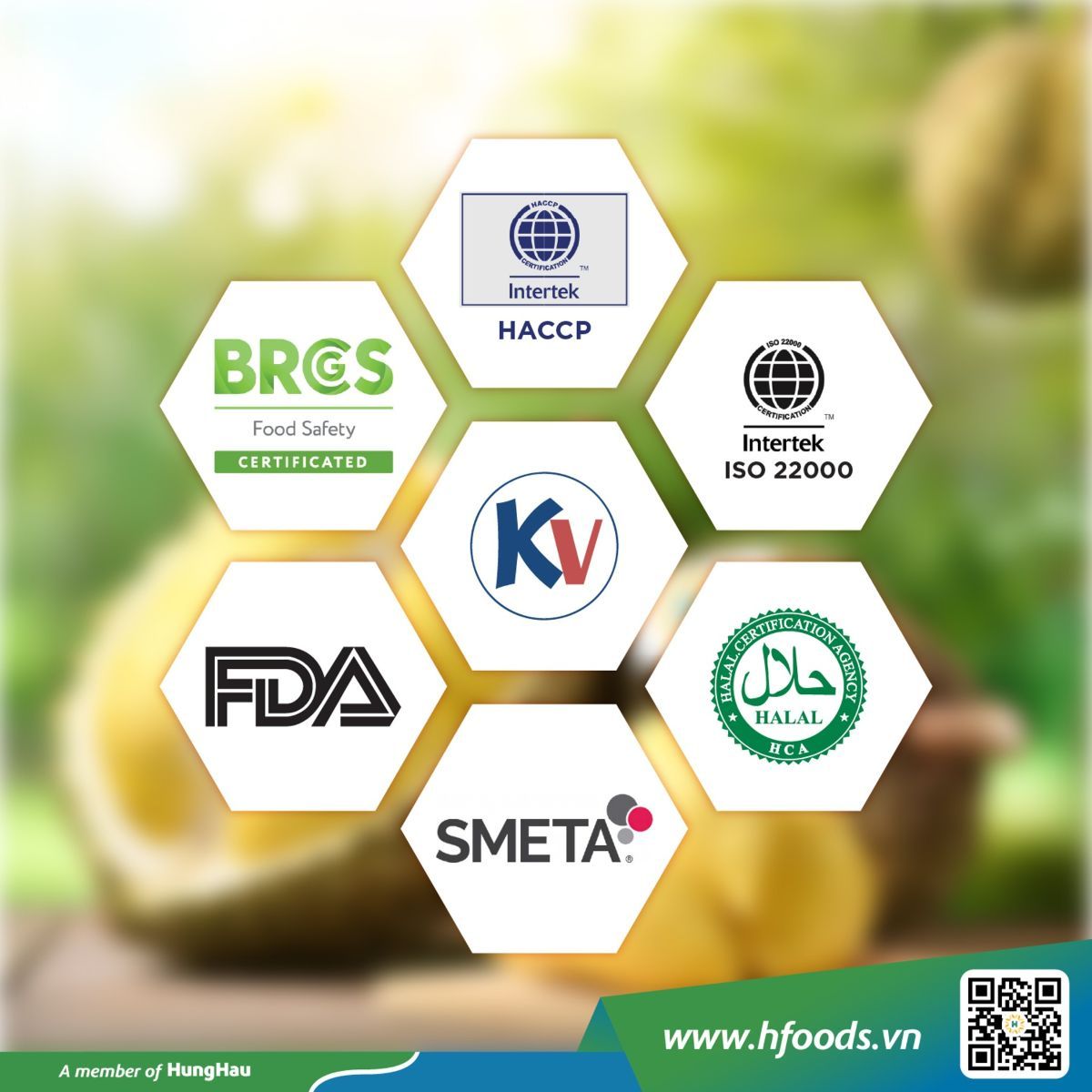
Regarding quality standards, HungHau Foods states that it has obtained GACC registration for frozen pineapple products intended for export to China. The company also applies food safety management systems such as HACCP, ISO 22000, and BRCGS in its processing operations. These standards provide a basis for partners to evaluate the company’s production conditions and quality control systems.
3. Production Capacity And Long Term Supply Capability
For businesses importing frozen pineapple in large quantities, production capacity is an important factor in maintaining a stable supply of raw materials. Suppliers should be able to organize sourcing, processing, and finished product storage according to order requirements. If supply volumes cannot meet the planned demand, businesses may need to adjust production schedules or seek alternative ingredient sources.
HungHau Foods reports a supply capacity of up to 2,000 tons of finished frozen pineapple products per year, serving food manufacturers and distributors. For large volume orders or regular imports, businesses can contact the company directly to discuss available quantities and delivery schedules to develop a suitable supply plan.
4. Consistent Quality Across Production Batches
Consistent raw material quality directly affects the ability to maintain production formulas and finished product characteristics. For frozen pineapple juice, variations in color, Brix level, acidity, or flavor between batches may require manufacturers to adjust mixing ratios, resulting in additional production time and costs.
HungHau Foods describes its frozen pineapple juice as having a slightly cloudy, pale yellow appearance and the natural aroma of pineapple. The product is processed and frozen for use as an ingredient in the food and beverage industry. When selecting a supplier, businesses should review product specifications and test actual samples to determine compatibility with their production formulas while establishing consistent quality requirements for future orders.
5. Sourcing Costs and Practical Production Efficiency
The price per kilogram does not fully reflect the total cost of using frozen pineapple in food production. In addition to the purchase price, businesses should consider ingredient loss, compatibility with production formulas, and additional processing requirements. These factors can affect usable ingredient quantities and overall production costs.
HungHau Foods supplies frozen pineapple juice in cube or block form for food and beverage manufacturing. Using preprocessed ingredients helps businesses reduce the preparation and juicing steps required for fresh pineapple while making portion control more convenient for individual production batches. However, overall cost efficiency should be evaluated based on product quality, sourcing costs, and compatibility with specific production lines.
HungHau Foods: Frozen Pineapple Supplier In Vietnam
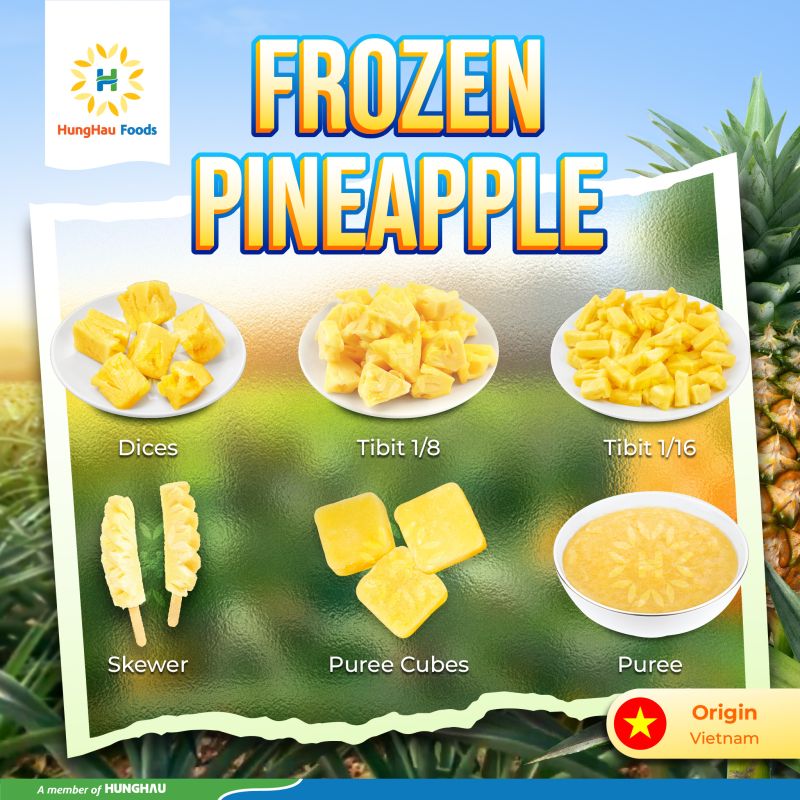
HungHau Foods is a company specializing in agricultural processing and exports, supplying frozen fruits and vegetables to domestic and international partners. Its frozen pineapple product range includes frozen pineapple juice cubes and frozen pineapple puree, serving the ingredient needs of food and beverage manufacturers.
These products are made from pineapples sourced in An Giang, Vietnam, and processed using freezing technology to extend shelf life and facilitate distribution. With a supply capacity of up to 2,000 tons of finished frozen pineapple products per year, HungHau Foods meets the large volume ingredient sourcing needs of importers and food manufacturers.
Raw Material Sources and Processing Operations
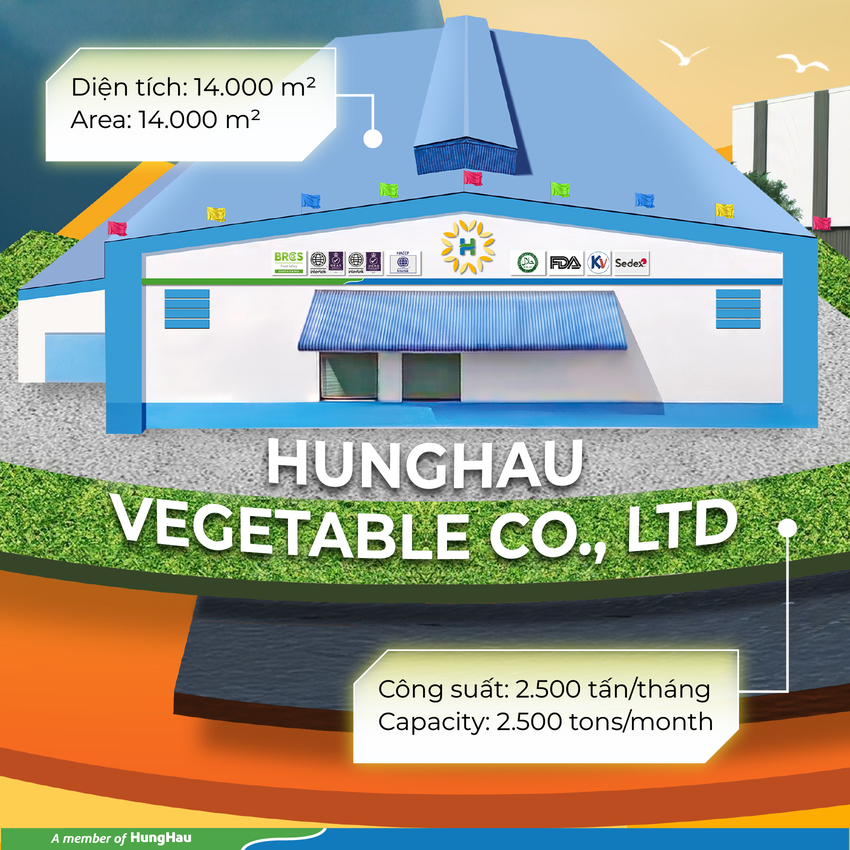
HungHau Foods sources pineapples from An Giang, Vietnam, where the main harvesting season runs from March to July. After harvesting, the raw materials are transported to the factory operated by HungHau Vegetable and Fruit Co., Ltd. (HFV) in Dong Thap for receiving, preparation, and processing into frozen pineapple products. Selecting suitable raw materials helps control important finished product characteristics, including color, sweetness, acidity, and flavor.
The production process involves several stages, from raw material preparation to freezing and storage. For importers, information about growing regions and production facilities provides a basis for evaluating product origins and reviewing traceability documents when necessary.
Product Range And Supply Capacity
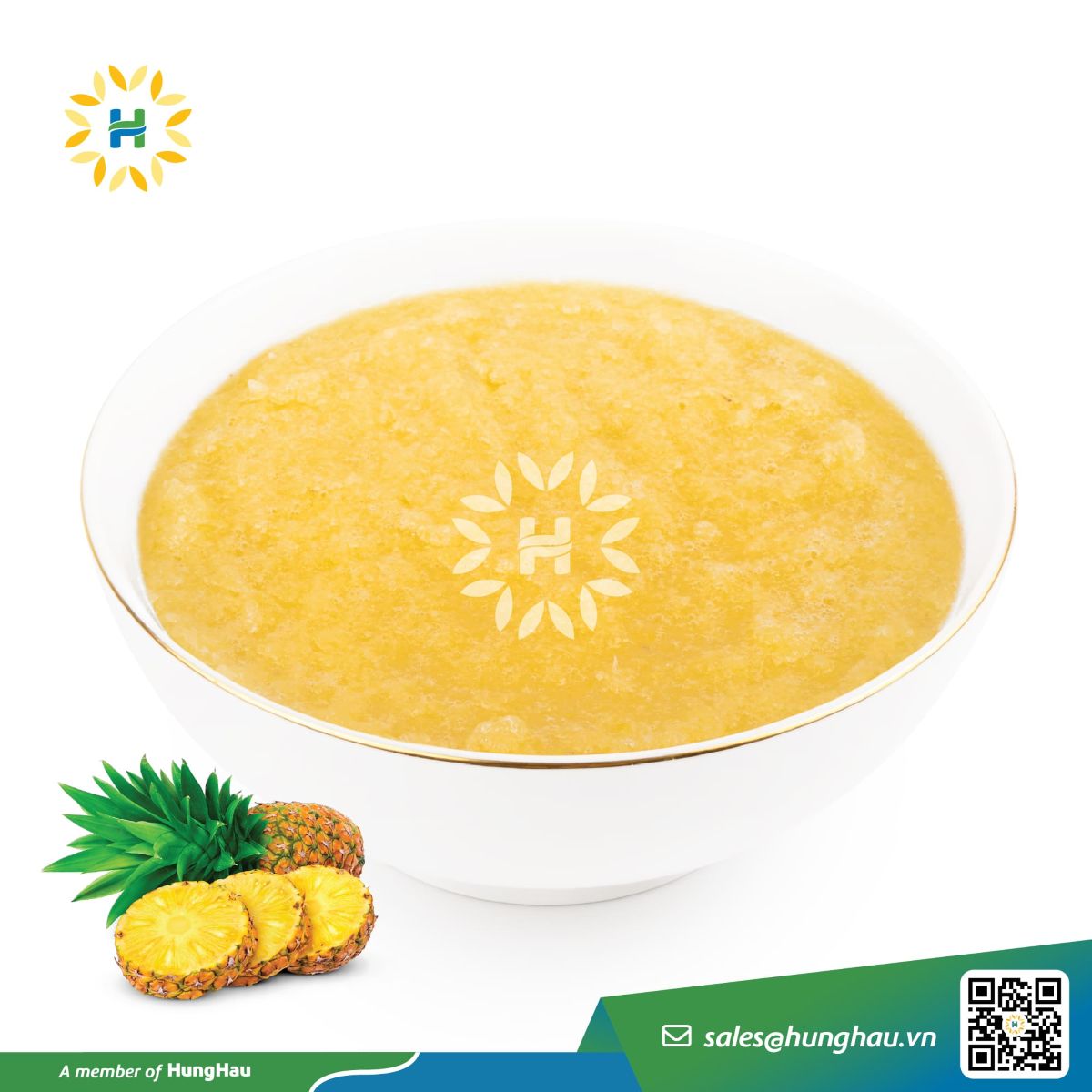
HungHau Foods offers two frozen pineapple product lines: frozen pineapple juice cubes and frozen pineapple puree. Frozen pineapple juice cubes are frozen into individual portions, making them convenient for measuring and mixing ingredients in beverage production. Meanwhile, frozen pineapple puree has a smooth consistency and can be used in products such as smoothies, ice cream, yogurt, and processed foods. Businesses can select the most suitable product based on their formulations and production requirements.
Regarding supply capacity, HungHau Foods reports an annual output of up to 2,000 tons of finished frozen pineapple products. This capacity applies to the overall frozen pineapple product category rather than each individual product line. For large volume import orders, businesses can contact the company to confirm available quantities, packaging specifications, and delivery schedules.
Freezing Technology And Storage Conditions
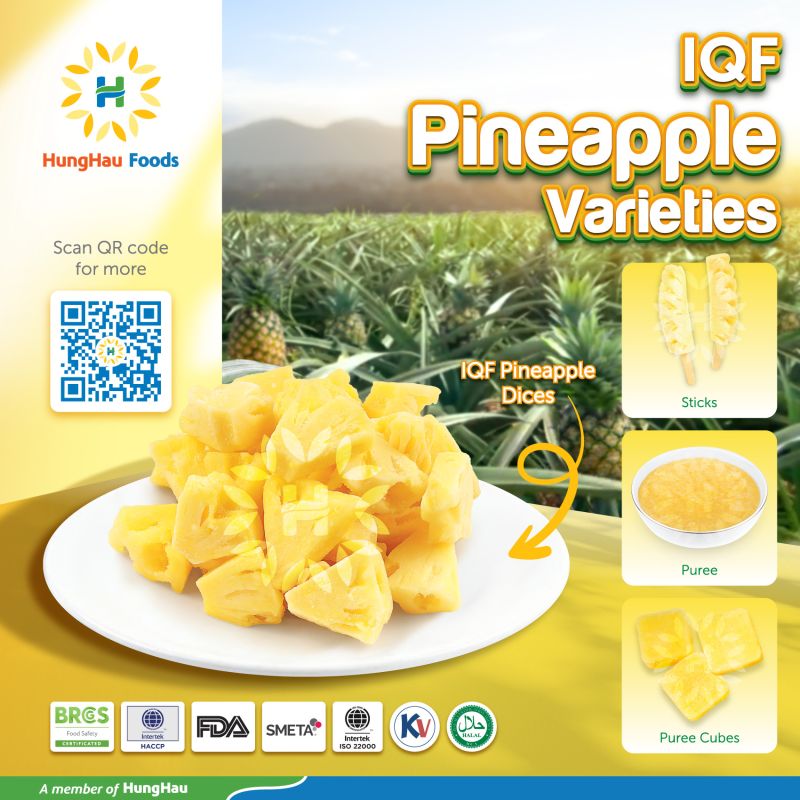
HungHau Foods applies IQF (Individual Quick Freezing) technology in its frozen pineapple processing operations. This technology helps limit the formation of large ice crystals, contributing to the preservation of raw material quality during storage. Depending on the characteristics of each product, raw materials are processed and frozen using suitable procedures before being transferred to storage.
Frozen pineapple products are stored at -18°C, with a reference shelf life of 24 months from the manufacturing date when the required storage conditions are maintained. For export operations, maintaining stable temperatures during storage and transportation helps prevent unintended thawing that could affect raw material quality.
Certifications And Quality Management Systems
HungHau Foods reports implementing food safety management systems such as HACCP, ISO 22000, and BRCGS in its processing operations. These standards address food safety hazard control, production conditions, and quality monitoring throughout the manufacturing process. This information helps partners evaluate the supplier’s quality management systems.
In addition, the company provides information about FDA, HALAL, Kosher, and SMETA related documentation and standards to meet the requirements of different markets. Importers should confirm the scope and validity of each certification or document for the specific products they intend to purchase.
Frequently Asked Questions About HungHau Foods Frozen Pineapple
What Is the Minimum Order Quantity for Frozen Pineapple At HungHau Foods?
Businesses interested in importing frozen pineapple in large quantities can contact HungHau Foods directly to discuss minimum order quantities (MOQ), product specifications, and suitable sourcing options.
Email: sales@hunghau.vn | Hotline: (+84) 79 721 3333
How Long Can Frozen Pineapple Be Stored?
HungHau Foods frozen pineapple products have a shelf life of up to 24 months when stored at -18°C under the required conditions. IQF technology helps limit the formation of large ice crystals, contributing to the preservation of raw material quality during storage.
What Payment Methods Does HungHau Foods Offer?
HungHau Foods offers flexible payment arrangements for customers. Specific payment terms and conditions will be discussed and agreed upon during the contract negotiation process.
CONTACT INFORMATION
HungHau Foods Joint Stock Company
Vietnamese Agricultural Exporter and Frozen Fruit & Vegetable Supplier
Address: 642 Au Co Street, Bay Hien Ward, Ho Chi Minh City, Vietnam.
Email: sales@hunghau.vn | Hotline: (+84) 79 721 3333
REFERENCES
Puree Thơm Đông Lạnh – Công ty Cổ phần Thực phẩm Hùng Hậu (HungHau Foods)
Nước Ép Thơm Viên Đông Lạnh – Công ty Cổ phần Thực phẩm Hùng Hậu (HungHau Foods)
Khóm/Dứa/ Thơm Tươi – Công ty Cổ phần Thực phẩm Hùng Hậu (HungHau Foods)