


Market News, News & Event
VALUE ADDED FROZEN DURIAN: FROM FROZEN RAW MATERIALS TO VALUE ADDED PROCESSED PRODUCTS
Durian is a high-value fruit widely used in the food industry thanks to its distinctive flavor and natural creaminess. However, the fresh durian trade is often affected by seasonality, limited shelf life, and transportation conditions. In this context, frozen durian helps extend shelf life, ensure a stable supply of raw materials, and support the development of various value-added products such as ice cream, cakes, beverages, and desserts, thereby increasing the overall value and applications of durian.
What Is Value Added Frozen Durian?
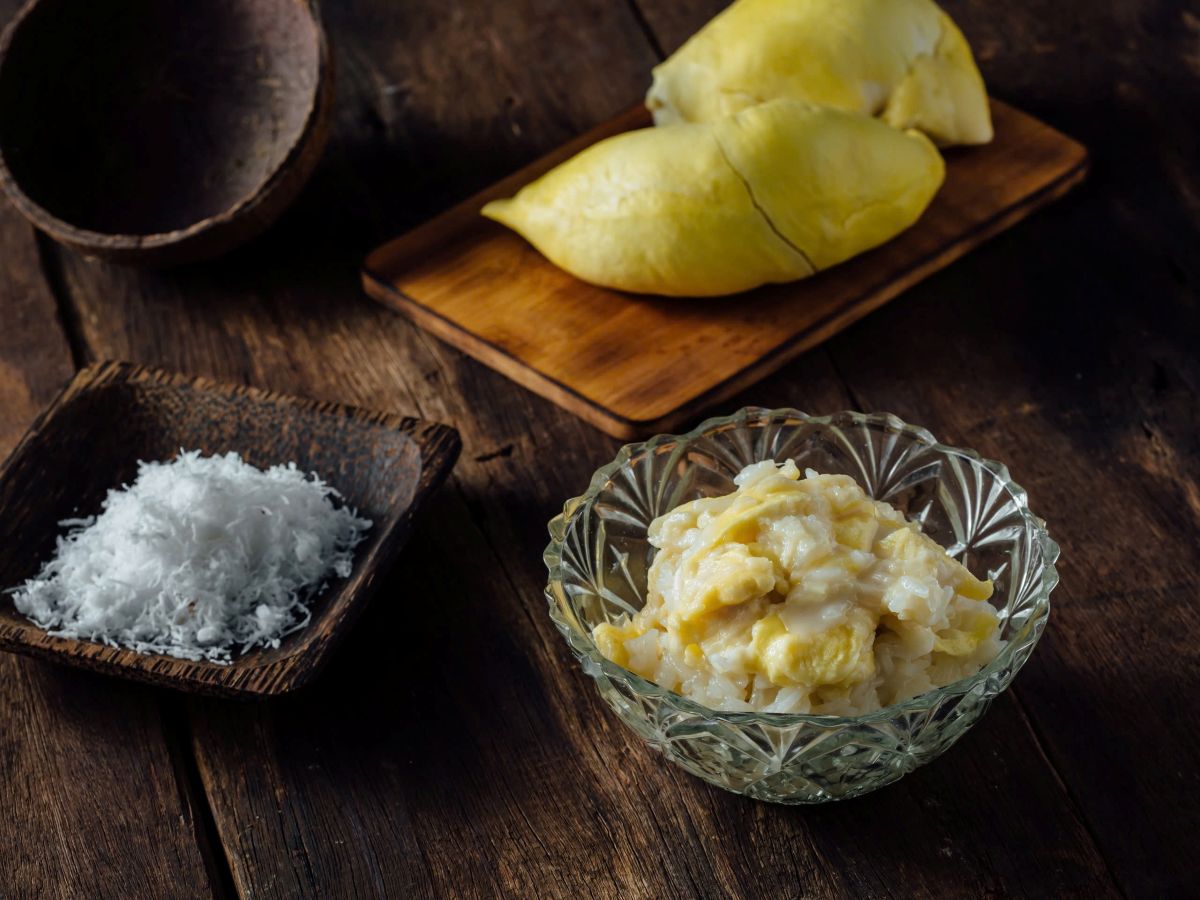
What Is Value Added Frozen Durian?
Value added frozen durian refers to the use of preprocessed and frozen durian as a raw material to develop products with a wider range of forms, textures, and applications. Instead of supplying only frozen durian segments for direct consumption, businesses can further process the raw material through grinding, blending, or combining it with other ingredients to create semi finished or finished products. Examples of value added durian products include durian mooncake filling, durian ice cream, and durian smoothies.
This process expands the applications of durian, transforming it from a preserved raw material into an ingredient used in the production of ice cream, cakes, beverages, desserts, and various other food products.
Differences Between Basic Frozen Durian and Value Added Products
Both basic frozen durian and value added products can be used in the food industry. However, they differ in their level of processing and intended applications.
| Criteria | Basic Frozen Durian | Value Added Products |
|---|---|---|
| Product nature | Durian that has been preprocessed and frozen for preservation. | Durian that undergoes further processing to create semi finished or new products. |
| Processing methods | Peeling, separating the segments, removing seeds according to specifications, and freezing. | Grinding, blending, mixing, or processing according to specific formulations. |
| Shape and texture | Primarily retains the original shape and characteristics of durian segments. | May vary in shape, texture, and composition. |
| Ingredients | Mainly durian, with no or minimal additional ingredients. | May contain pure durian or be combined with milk, sugar, fats, and other ingredients. |
| Applications | Used directly or as an input material for further processing. | Used in the production of ice cream, cakes, fillings, beverages, and finished food products. |
| Examples | Frozen durian segments and frozen seedless durian segments. | Durian puree, durian filling, durian ice cream, and durian cakes. |
Why Is Deep Processing of Durian Gaining Attention?
Addressing Seasonality And Post Harvest Losses
The supply of fresh durian often varies depending on harvest seasons and growing conditions in different raw material regions. When production increases significantly within a short period, sales and preservation can become challenging for businesses without suitable processing and distribution systems.
Freezing helps extend the shelf life of preprocessed durian, reducing dependence on harvest periods. When used in further processing, frozen durian can be incorporated into production according to planned schedules rather than having to be sold within a limited period. This gives businesses greater flexibility in raw material management, production planning, and product distribution.
Increasing Value Per Kilogram of Raw Material
When businesses sell only fresh durian or frozen durian segments, the product’s value mainly comes from the original raw material. However, through deep processing, the same durian supply can be developed into various products instead of being sold only as durian segments.
For example, durian flesh can be ground into puree for use in cake fillings, ice cream, or beverages. Durian can also be blended with other ingredients to create fillings and different dessert products. Each processed product has its own applications and target customers. This gives businesses more commercial opportunities, improves raw material utilization, and creates greater value compared to selling durian in its original form.
Meeting Export Market Requirements
For export activities, durian products must meet requirements related to raw material quality, food safety, product specifications, and storage conditions in each market.
Frozen durian and processed durian products can be developed in various specifications to meet the needs of importers and food manufacturers. In this process, controlling raw material quality, processing procedures, traceability, and maintaining the cold chain are essential factors. These are also important considerations for businesses developing products for international markets.
In addition, exporting fresh durian involves certain risks. Issues during customs clearance, as well as moisture and mold development, can lead to product deterioration and spoilage.
Serving The Needs Of The Food Service And Food Manufacturing Industries
Durian is used in a wide range of food and beverage products, including sweet soups, ice cream, cakes, smoothies, and desserts. For food businesses, using preprocessed and frozen ingredients helps reduce the need to handle and process fresh durian at stores or production facilities.
Furthermore, different forms of raw materials, such as seeded durian segments, seedless durian segments, and puree, can be selected depending on specific recipes. With various processing specifications available, frozen durian is suitable for restaurants, bakeries, food service businesses, beverage chains, and food manufacturing facilities.
Durian Varieties Suitable For Frozen Processing
The choice of durian variety affects the color, flavor, creaminess, and texture of the final product. Among them, Ri6 and Monthong are two varieties used in frozen durian products, serving different processing purposes and applications.
Ri6 Durian
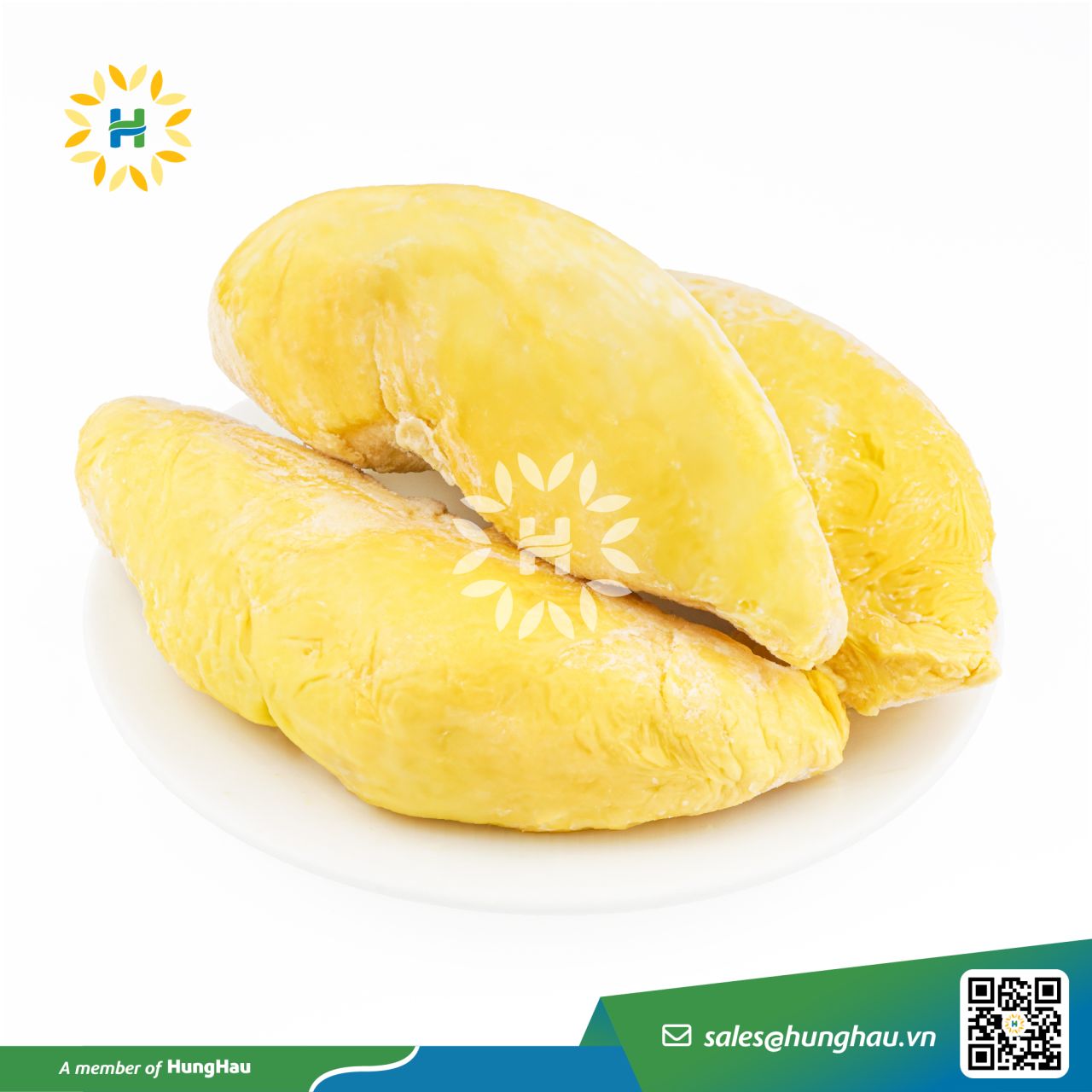
Ri6 durian has golden yellow flesh, a rich sweetness, a creamy texture, and a distinctive aroma. It is a popular durian variety in Vietnam, widely used for both fresh consumption and food processing.
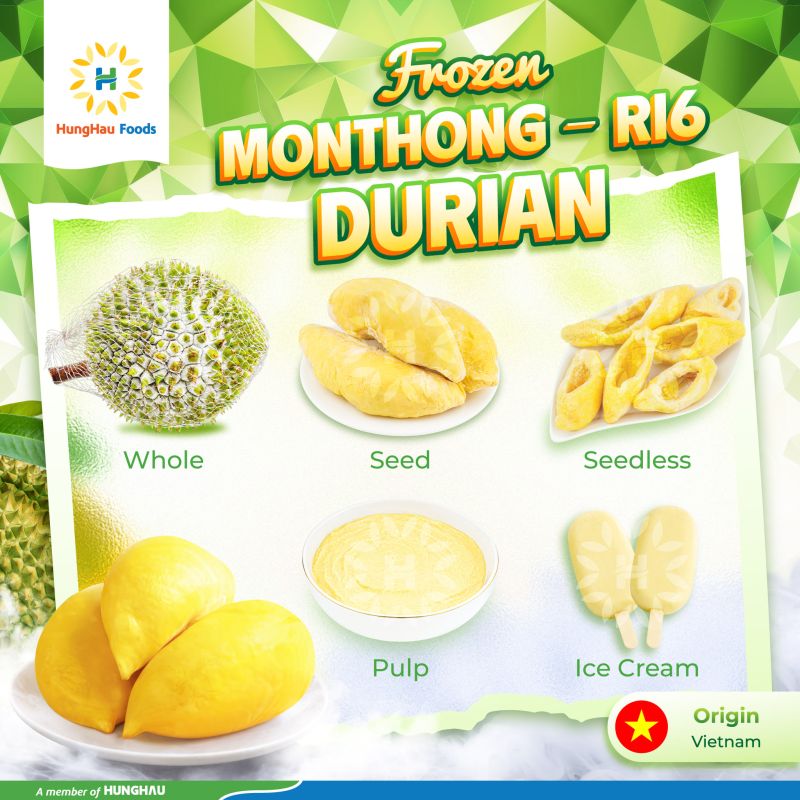
When processed into frozen products, Ri6 durian can be prepared in various forms, including seeded segments, seedless segments, and puree. Its distinctive flesh color and flavor make it suitable for products that require a pronounced durian taste, such as ice cream, cake fillings, and desserts. Depending on order requirements, businesses can select suitable raw material specifications to match their production recipes.
Monthong Durian
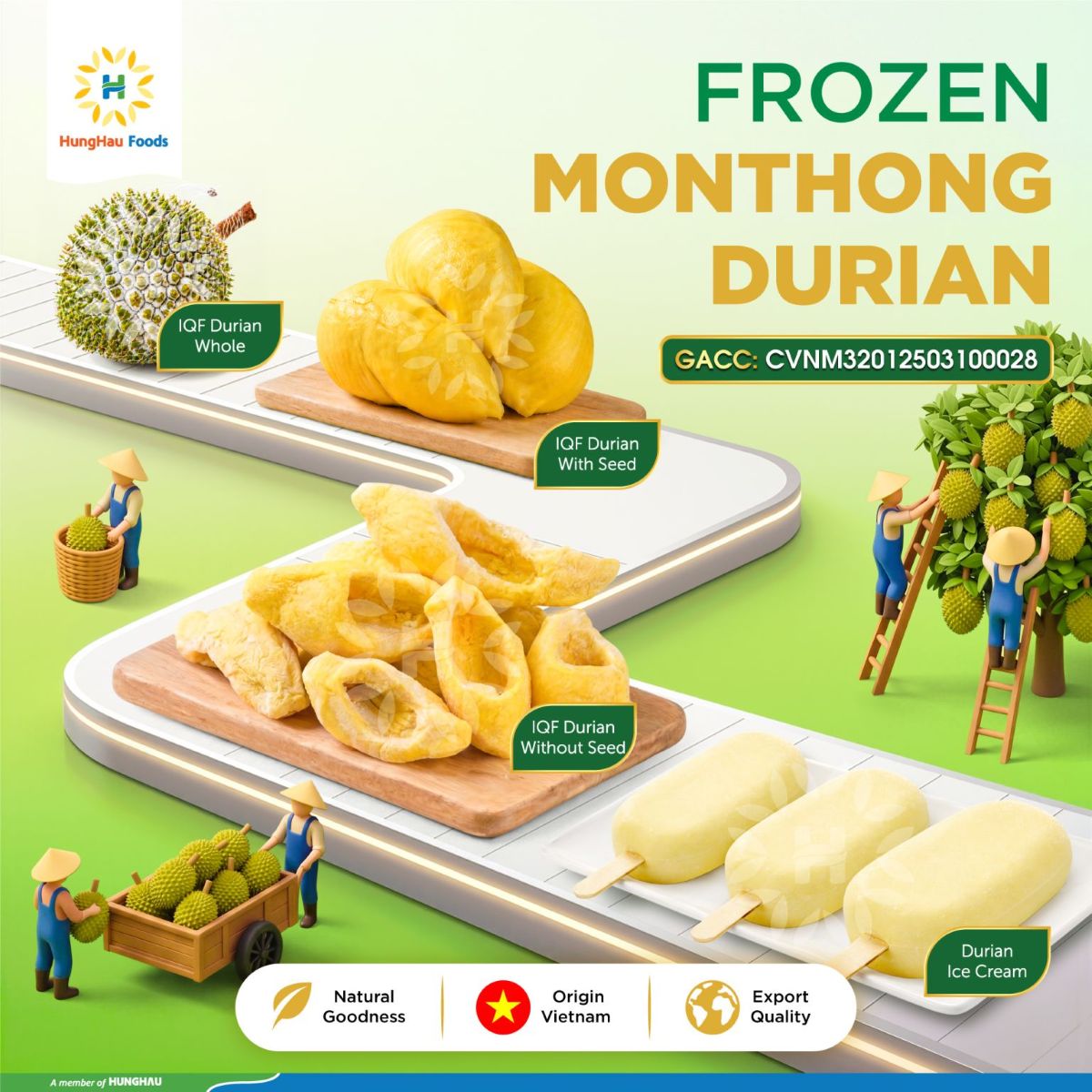
Monthong durian originates from Thailand and is widely used in international trade. Its flesh is typically pale yellow, with large segments and a relatively firm, less moist texture.
For frozen products, Monthong can be supplied in various forms, including seeded segments, seedless segments, and puree. Its large segment size and texture make this variety suitable for certain processing and distribution requirements. The choice between Monthong and Ri6 should depend on the desired flavor, raw material specifications, and characteristics of the final product.
Value Added Product Categories From Frozen Durian
Frozen durian can be used as a raw material to develop various food products. Depending on the formulation and production process, the durian flesh can retain its original shape, be processed into a smooth puree, or be combined with other ingredients to create finished products.
Ice Cream And Frozen Desserts
Durian ice cream is one of the most common applications, thanks to the fruit’s distinctive flavor and natural creaminess. After removing the seeds and processing the flesh, it can be blended with other ice cream ingredients and then frozen to achieve the desired texture and consistency.
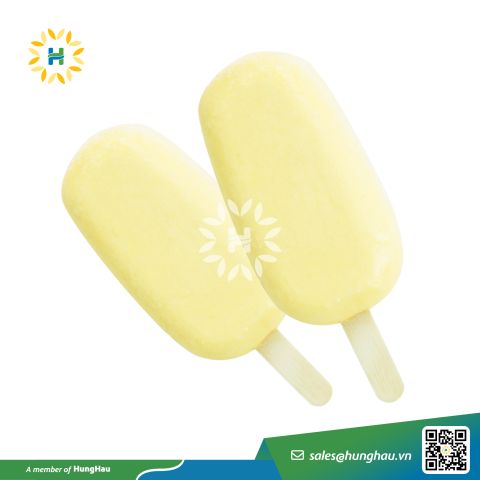
In addition to popsicles and ice cream tubs, durian can also be used in frozen desserts such as mousse, chilled cakes, and products featuring multiple layers of ingredients. For these products, the durian content in the formulation, fat content, and ability to retain its distinctive flavor are important factors to consider during product development.
Durian Cakes And Fillings
In bakery production, durian is commonly used as a filling or an ingredient to create a distinctive flavor. After removing the seeds, the durian flesh can be pureed or blended with milk, sugar, and other ingredients to create a soft, creamy, and aromatic filling.
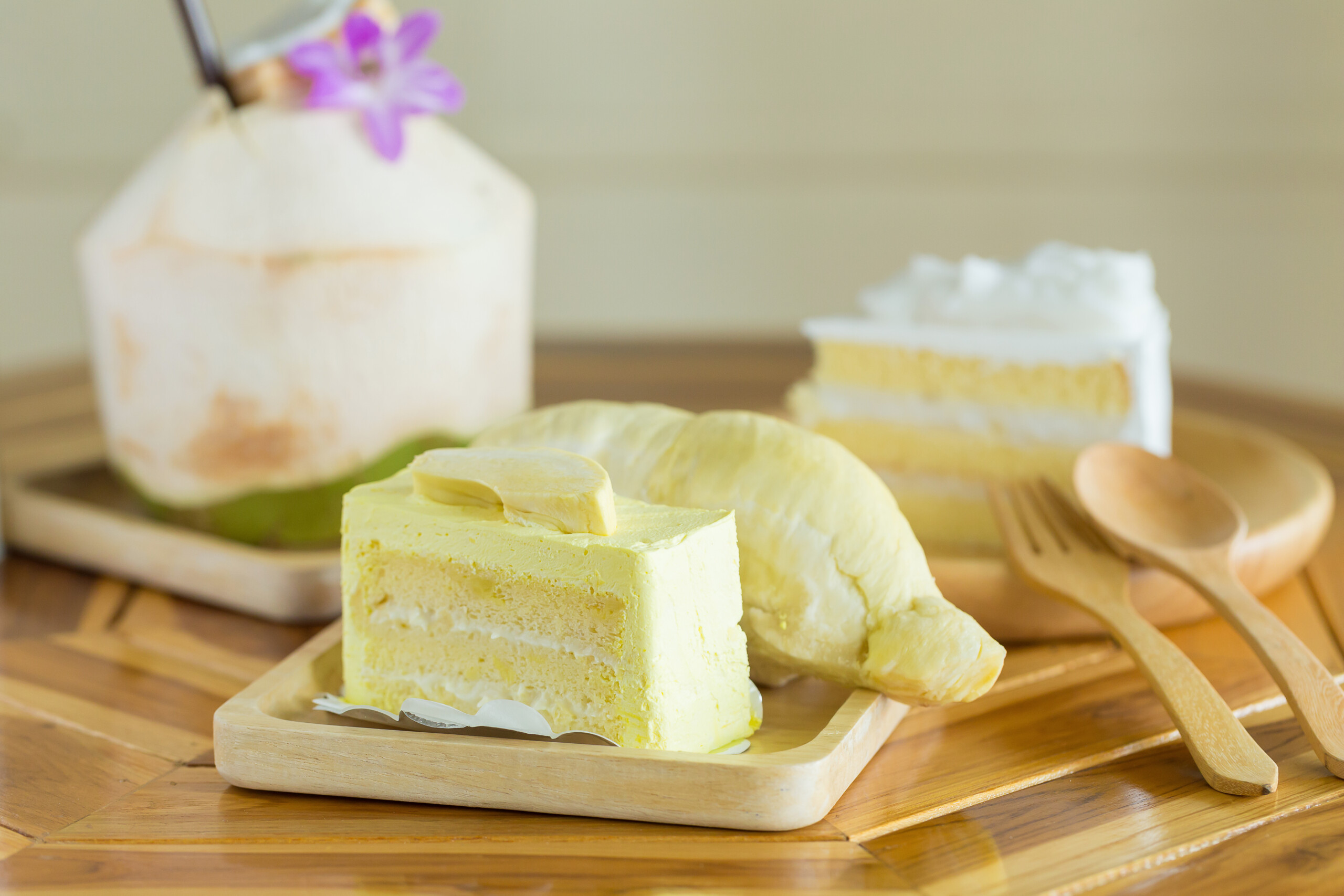
Some products that can incorporate this ingredient include Vietnamese durian pastries (Banh Pia), steamed buns with durian filling, cream puffs, and Swiss rolls. For manufacturers, preprocessed frozen durian helps reduce the time required for peeling, deseeding, and preparing the raw material. Using suitable product specifications also makes it easier to measure ingredients and maintain consistency across production batches.
Beverages And Dishes Featuring Durian
Durian can be used as a main ingredient in various beverages, such as smoothies, durian milk, and drinks blended with fresh milk, cream, and ice. The deseeded flesh can be pureed to create a thick, creamy consistency while retaining its distinctive flavor in the finished product.
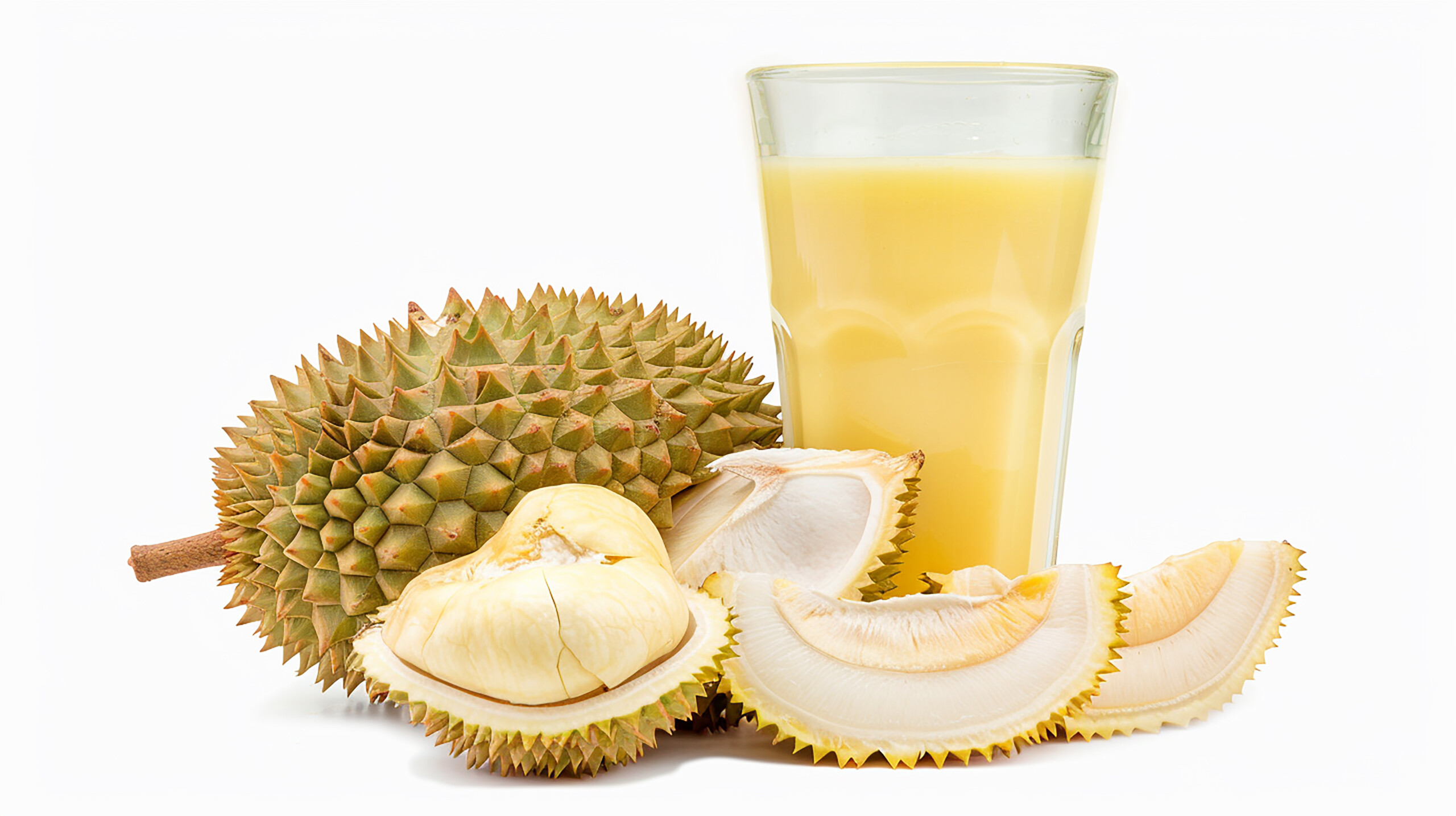
In addition to beverages, durian can also be incorporated into various dishes such as sweet soups, sticky rice, and desserts. For dishes that require the fruit to retain its original segment shape, food processors can use frozen durian segments after proper thawing. Meanwhile, pureed durian flesh is suitable for recipes that require blending with milk, cream, or other ingredients.
For sweet soup shops, ice cream parlors, beverage stores, and restaurants, durian can also be used as a topping, sauce, or garnish. The choice between durian segments and pureed flesh depends on the desired texture and serving style of the finished product.
Durian Puree and Semi Finished Products for Manufacturing
Durian puree is produced by grinding deseeded durian flesh into a smooth and uniform mixture. Compared with whole durian segments, puree is easier to blend with other ingredients, convenient for portioning, and suitable for use in various food processing formulations.
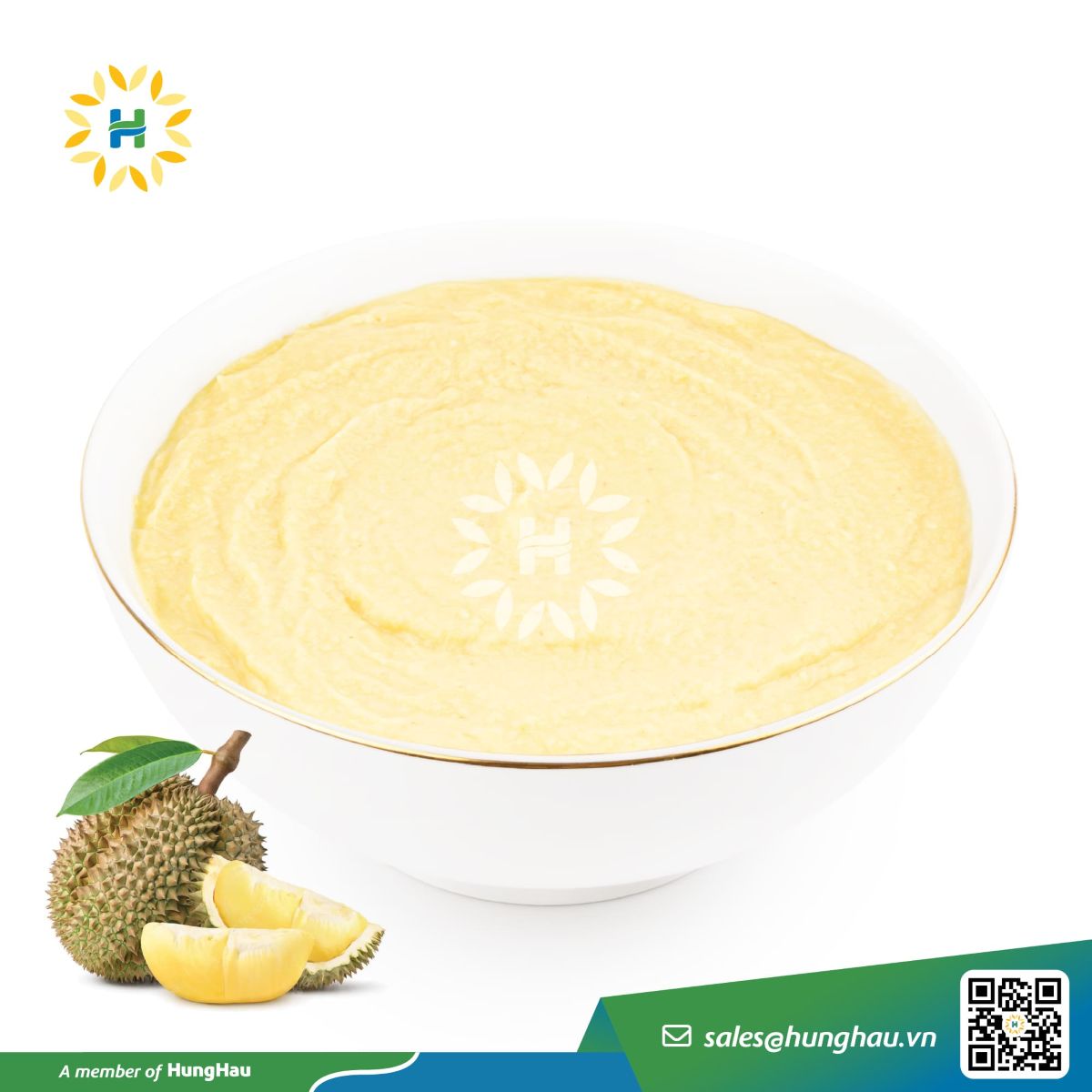
This ingredient is used in the production of ice cream, cakes, fillings, beverages, sauces, and other food products. For food manufacturers and processing businesses, using durian puree helps reduce preparation steps while making it easier to control the amount of raw material used in each production batch.
Production Process For High Quality Frozen Durian
To ensure the quality of frozen durian, the production process must be controlled at every stage, from raw material selection to storage and transportation. The basic process follows these steps:
Raw Material Sourcing → Harvesting at the Right Ripeness → Inspection and Grading → Preprocessing, Segment Separation, and Cleaning → Individual Quick Freezing (IQF) → Packaging → Storage at -18°C → Transportation in Refrigerated Containers.
Durian is sourced from growing regions across the Mekong Delta, Southeast Vietnam, and the Central Highlands. After harvesting, the fruits are inspected for ripeness and external condition, then graded to remove damaged or substandard ones. Approved raw materials proceed to peeling, flesh separation, cleaning, and processing according to the required product specifications, including seeded segments, seedless segments, or puree.
Next, the raw materials undergo Individual Quick Freezing (IQF). Under the applied production process, the freezing temperature can reach approximately -40°C. This method shortens freezing time and helps minimize the formation of large ice crystals, supporting the preservation of the durian flesh’s color, aroma, and texture.
After freezing, the products are packaged according to storage requirements and order specifications. Frozen durian is then stored in cold storage at -18°C and transported in refrigerated containers to maintain proper storage conditions throughout distribution.
HungHau Foods: Frozen Durian Supplier For Food Processing
For food manufacturers, selecting a frozen durian supplier requires consideration of several factors, including raw material sources, production capacity, product specifications, storage conditions, and quality control systems.
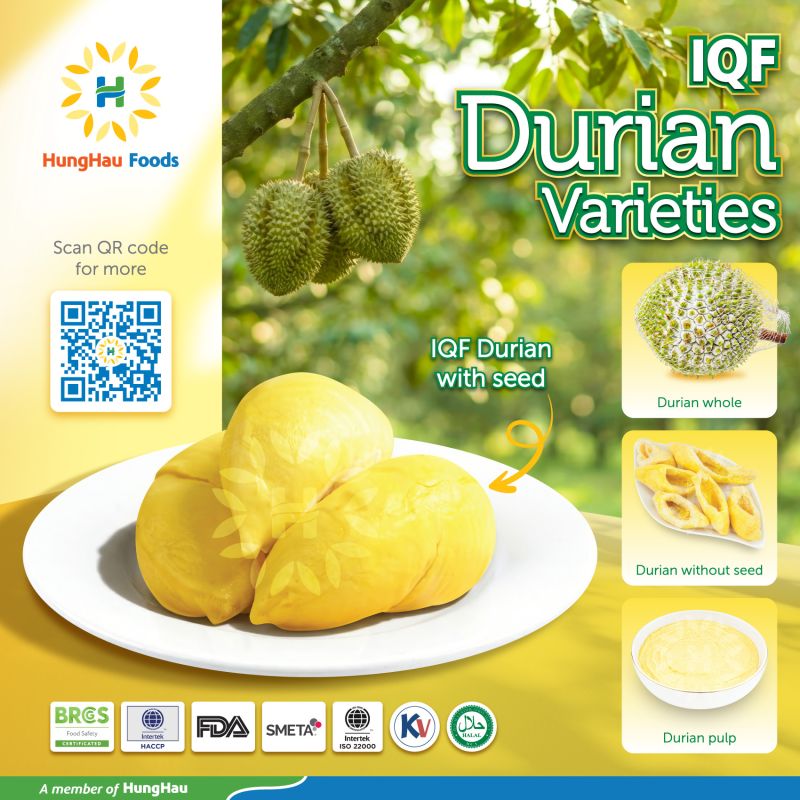
HungHau Foods supplies frozen durian from two varieties, Ri6 and Monthong, in various forms, including whole durian, seeded segments, seedless segments, and puree. These specifications serve a wide range of applications, from raw material distribution to the production of ice cream, cakes, beverages, and other food products.
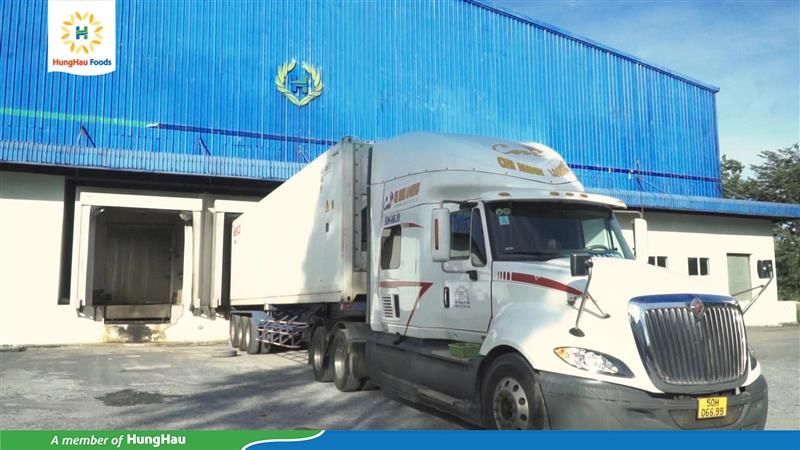
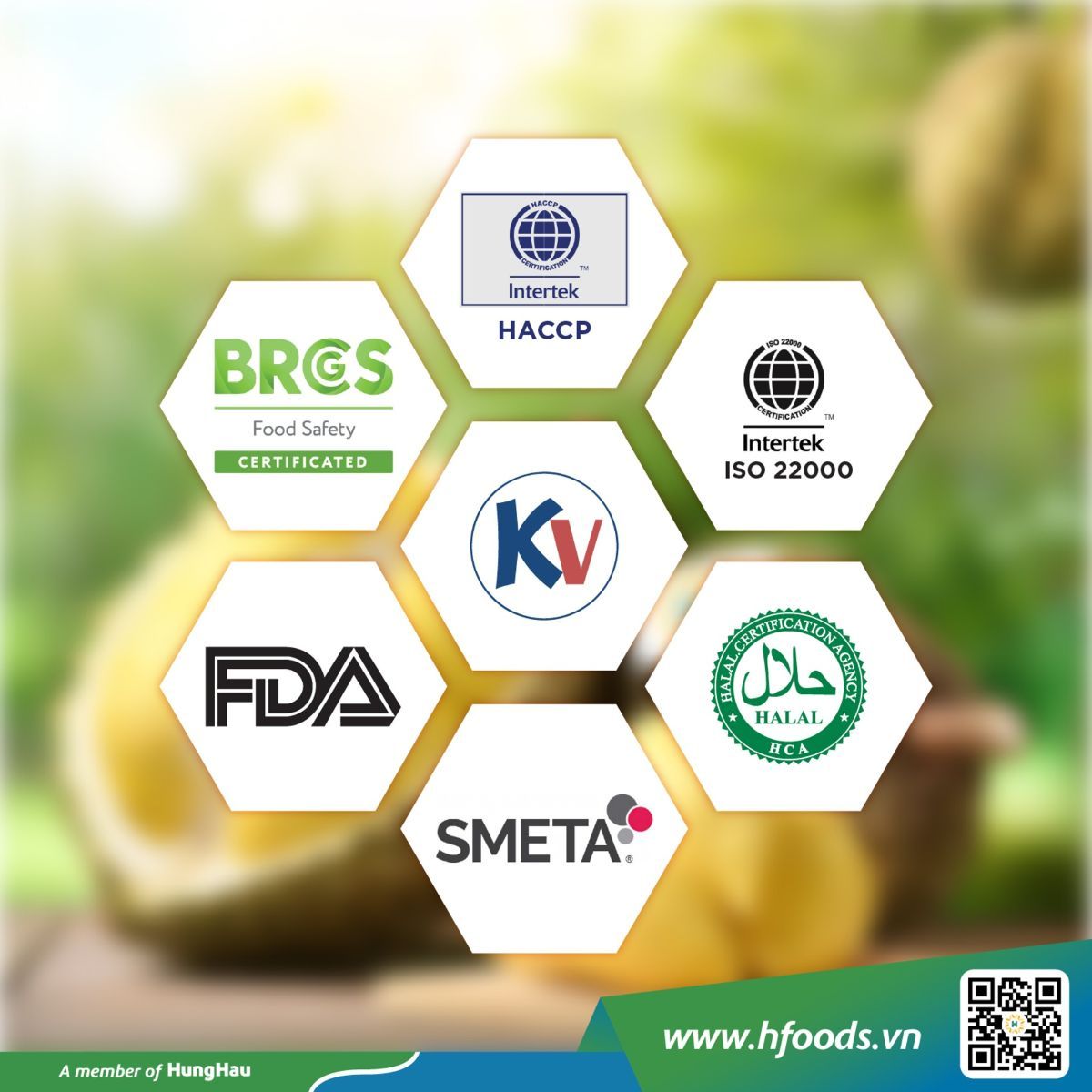
The products are manufactured at Hung Hau Fruit and Vegetable Factory (HFV) in Dong Thap, with a reported production capacity of 2,500 tons per month. Frozen Ri6 durian alone has a supply capacity of up to 4,000 tons per year. According to company-provided information, the factory applies relevant food safety management systems and standards, including HACCP, ISO 22000, BRC, and Halal. It also maintains export-related registrations and compliance requirements, including a GACC registration code for the Chinese market.

In addition to frozen raw materials, HungHau Foods also develops durian ice cream, with a declared composition of 96% pureed durian flesh. This represents another application of durian in finished food production, helping expand the product portfolio derived from locally sourced durian.
Conclusion
Frozen durian is not only a solution for preserving post-harvest raw materials but also creates opportunities to develop various products such as ice cream, cakes, beverages, and puree. Diversifying product applications allows businesses to make better use of available raw materials and meet the different needs of the food industry.
With frozen Ri6 and Monthong durian available in various product specifications, HungHau Foods provides a diverse range of raw materials for food processing and distribution businesses.
References
https://hfoods.vn/vi/hung-hau-foods-dat-chung-nhan-gacc-voi-mat-hang-sau-rieng-dong-lanh/
CONTACT INFORMATIONHung Hau Food Joint Stock Company (HungHau Foods)
Agricultural Exporter – Supplier of Frozen Fruits and Vegetables in Vietnam.
Address: 642 Au Co Street, Bay Hien Ward, Ho Chi Minh City, Vietnam.
Email: sales@hunghau.vn | Hotline: (+84) 79 721 3333